Financial Breakdown
Asset Distribution
Assets vs Liabilities
Assets
Disclaimer: These financial estimates are based on publicly available information and should be considered approximate. Last updated: 12/31/2025
Biography
Introduction: A Literary Revolutionary
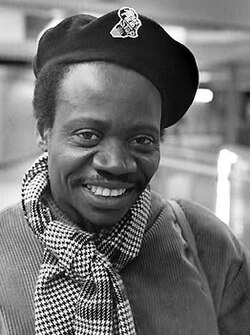
Sony Labou Tansi† (1947–1995) stands as one of the most audacious and influential literary figures to emerge from post-colonial Africa. A masterful Playwright & Novelist from the Republic of the Congo, Tansi carved a unique niche in world literature with his explosive, poetic, and fiercely political body of work. Renowned for his linguistic innovation and scathing critique of dictatorship and corruption, he became a defining voice in the Arts & Culture landscape of Central Africa. His key achievement lies in forging a new literary language—a blend of surrealism, raw realism, and biting satire—that captured the absurdities and tragedies of the African post-colonial state. Through seven novels and over twenty plays, Sony Labou Tansi† challenged both political oppression and literary conventions, leaving an indelible mark on Francophone and global literature.
Early Life & Education: Forging a Vision
Sony Labou Tansi was born Marcel Ntsoni on June 5, 1947, in Kimwanza, then in the Belgian Congo (now Democratic Republic of the Congo). His family later moved to Brazzaville, the capital of the neighboring Republic of the Congo, which became his lifelong home and the primary setting for his fictional universe. His early education was in Congolese schools, where he was immersed in French literature and his own Lari cultural heritage. This dual influence—European literary tradition and Central African oral storytelling—would become a hallmark of his style.
A pivotal formative experience was his secondary education at the Lycée Marx-Dormoy in Brazzaville, followed by teacher training. He worked as a teacher in Kinshasa and Brazzaville, a profession that deepened his understanding of societal structures and the power of language. The political tumult of the 1960s and 1970s in both Congos, marked by coups, Marxist-Leninist experiments, and the cult of personality surrounding leaders, provided the raw, often horrifying material that would fuel his writing. He adopted the pen name "Sony Labou Tansi," with "Sony" meaning "the one who speaks" in Lari, a prophetic choice for a writer destined to give voice to the silenced.
Career & Major Achievements: A Prolific and Provocative Oeuvre
Sony Labou Tansi's career exploded onto the international scene in 1979 when his first novel, La Vie et demie (Life and a Half), won the prestigious Prix de la Fondation de la Francité. This grotesque and fantastical allegory of a dictator who continues to rule even after being dismembered announced a major new talent. It established his signature themes: the violence of power, the resilience of the oppressed, and the body politic under siege. This success was followed by a torrent of creative output throughout the 1980s, a golden decade for the author.
Literary Innovation and Theatrical Force
As a Playwright & Novelist, Tansi was relentlessly innovative. His novels, including L'État honteux (The Shameful State, 1981) and Les Sept solitudes de Lorsa Lopez (The Seven Solitudes of Lorsa Lopez, 1985), are characterized by a fragmented narrative style, neologisms, and a visceral, corporeal prose that critics described as "baroque." He didn't just tell stories; he crafted immersive, often disorienting experiences that mirrored the chaos of the societies he depicted.
In theatre, he was equally transformative. He founded the Rocado Zulu Théâtre in Brazzaville in 1979, a radical company that became a hub for theatrical experimentation and political dissent in Central Africa. His plays, such as Je, soussigné cardiaque (I, Undersigned Cardiac, 1981) and Moi, veuve de l'empire (I, Widow of the Empire, 1987), were performed across Africa and Europe, cementing his reputation as a leading figure in Francophone theatre. His work for the stage was direct, confrontational, and designed to provoke dialogue and resistance.
International Recognition and Political Stance
Sony Labou Tansi† gained widespread international acclaim. His works were translated into numerous languages, and he participated in major literary festivals worldwide. Despite—or because of—his growing fame, he remained a fierce critic of the Congolese government and the one-party state system. His outspokenness led to constant harassment, censorship, and brief imprisonment. His literature was his primary form of activism, using allegory and satire to expose truths that direct political discourse could not safely address. In 1995, he was even a symbolic candidate for the presidency of the Republic of the Congo, a testament to his role as a moral and intellectual leader.
Personal Life, Death & Legacy: The Enduring Voice
Beyond his public persona as a dissident writer, Sony Labou Tansi was known as a charismatic and generous mentor to younger artists. He was deeply committed to cultivating the next generation of Congolese writers and playwrights through his theatre company and teaching. His personal life was marked by the same intensity as his work; he was a prolific writer until the very end.
Tragically, Sony Labou Tansi† died on June 14, 1995, in Brazzaville from complications related to AIDS. His death at the age of 48 silenced one of Africa's most vital literary voices prematurely. However, his legacy has only grown stronger. He is now universally recognized as:
- A pioneer of the "New African Writing" that broke from traditional realism.
- A key influence on subsequent generations of African authors, from Alain Mabanckou to Léonora Miano.
- A central figure in the canon of post-colonial and world literature.
- A courageous symbol of artistic resistance against autocracy.
Academic studies of his work proliferate, his plays are still staged, and his novels remain in print, continuously finding new readers who see reflections of contemporary political absurdities in his prescient visions. The Sony Labou Tansi Prize, a literary award, honors his name and perpetuates his commitment to Francophone letters.
Literary Estate & Lasting Value
While discussions of net worth are rarely applicable in the traditional sense to literary figures from his context, the value of Sony Labou Tansi's† intellectual and artistic estate is immeasurable. His primary "business" was his writing and his theatre company, Rocado Zulu Théâtre, which operated more as a cultural mission than a commercial venture. His financial success was modest, especially given the political pressures he faced. However, the commercial and cultural value of his published works endures through:
- Continued global sales and translations of his novels and plays.
- Academic licensing and anthology inclusions.
- The performance rights for his influential plays.
His true wealth lies in the enduring power of his words. In the landscape of Arts & Culture, Sony Labou Tansi† crafted a legacy that transcends monetary measure—a body of work that continues to challenge, inspire, and speak truth to power, securing his place as a titan of literature from the Republic of the Congo and beyond.
Net Worth Analysis
Sony Labou Tansi was a renowned playwright and novelist, not a business figure; he passed away in 1995, and his legacy is cultural, not financial.
Quick Stats
Related People
Abasse Ndione
Novelist & Playwright
Abdel Rahman al-Abnudi†
Poet (Egypt-Sudan)
Abdelkrim Ghallab†
Novelist & Journalist
Abdellah Taïa
Novelist & Filmmaker