Financial Breakdown
Asset Distribution
Assets vs Liabilities
Assets
Disclaimer: These financial estimates are based on publicly available information and should be considered approximate. Last updated: 12/29/2025
Biography
Introduction: A Defining Figure in Sierra Leonean Politics
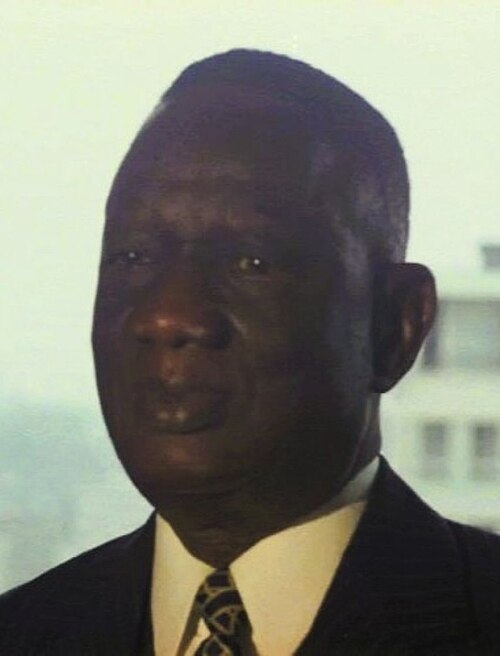
Siaka Probyn Stevens† stands as one of the most pivotal and complex figures in the political history of Sierra Leone. Serving as Prime Minister from 1968 and then as the nation's first Executive President from 1971 to 1985, Stevens' tenure fundamentally shaped the post-colonial trajectory of the West African state. His rise to power marked the end of a turbulent period of military coups, ushering in an era of remarkable, albeit authoritarian, stability. A master political strategist, Stevens is notable for consolidating state power under a one-party system, maintaining Sierra Leone's non-aligned stance during the Cold War, and overseeing significant infrastructural projects. However, his legacy is deeply contested, intertwined with both nation-building achievements and the establishment of a patronage system that had long-term consequences for the country's governance and economy. Understanding Siaka Stevens† is essential to understanding modern Sierra Leone.
Early Life & Education: From Railway Worker to Trade Unionist
Siaka Stevens was born on August 24, 1905, in the Moyamba District, though he was largely raised in Freetown. Unlike many of the educated elite from the Creole community, Stevens' early life was rooted in more practical, working-class experiences. After completing his primary education, he began his career as a police officer and later as a railway worker. This period proved formative, exposing him to the grievances of the labor force. In the 1930s, he became a prominent trade unionist, helping to organize the Sierra Leone Mine Workers' Union. His effectiveness in this role caught the attention of the colonial authorities, who awarded him a scholarship to study at Ruskin College, Oxford, in 1947—an institution known for educating trade unionists and labor leaders.
This educational experience in the United Kingdom sharpened his political acumen and connected him with broader anti-colonial and socialist ideas. Upon returning to Sierra Leone, Stevens transitioned seamlessly from labor activism to mainstream politics. He was appointed to the Protectorate Assembly and later became the first Minister of Lands, Mines, and Labour in 1951 under the colonial administration, giving him early and crucial insight into the two sectors—mining and land—that would dominate Sierra Leone's political economy for decades. His background as a protectorate-born trade unionist, rather than a Freetown Creole, positioned him uniquely to build a mass political base.
Career & Major Achievements: The Path to the Presidency
Siaka Stevens' political career was marked by resilience and strategic maneuvering. He was a founding member of the Sierra Leone People's Party (SLPP) but left in 1958 to form the more populist All People's Congress (APC). The APC's victory in the 1967 general election, which made Stevens Prime Minister, was immediately interrupted by a military coup. He was briefly imprisoned before a counter-coup in 1968 restored him to power, beginning his uninterrupted rule.
Consolidation of Power and the One-Party State
Stevens moved decisively to secure his authority. In 1971, he declared Sierra Leone a republic and became its first Executive President, centralizing power. Facing attempted coups and significant opposition, he orchestrated the creation of a one-party state in 1978 under the APC banner, arguing it was necessary for national unity. While this move suppressed political dissent, it also brought a period of relative calm after the instability of the late 1960s.
Economic Policies and Infrastructural Development
President Siaka Stevens† presided over several key national projects. His government:
- Hosted the Organization of African Unity (OAU) summit in 1980, leading to the construction of the landmark Youyi Building and the Bintumani Hotel conference center.
- Oversaw the completion of the Bank of Sierra Leone complex and the national stadium.
- Maintained a foreign policy of non-alignment, cultivating relationships with both Eastern and Western blocs during the Cold War.
However, the economy became increasingly characterized by a system of "crony capitalism," where state resources and the lucrative diamond trade were used to reward political loyalty. This period saw a significant decline in formal institutions and a rise in illicit smuggling, weakening the state's revenue base.
Peaceful Transition and Retirement
A defining, and often praised, aspect of his rule was his voluntary retirement in 1985. Despite pressure and a constitutional amendment allowing him a further term, the 80-year-old Stevens handpicked his successor, Major-General Joseph Saidu Momoh, and stepped down. This peaceful transfer of power within the one-party framework was a rarity in the region at the time.
Personal Life, Legacy, and Lasting Impact
Personally, Siaka Stevens† was known as a charismatic and shrewd political operator, often referred to as "Pa Shaki" or "The Old Man." His legacy is a subject of intense debate among historians and citizens of Sierra Leone. On one hand, he is credited with unifying a fractious nation, maintaining sovereignty, and leaving office peacefully. The infrastructural landmarks built during his era remain part of Freetown's skyline.
On the other hand, critics argue his political system entrenched corruption, eroded democratic institutions, and crippled the formal economy through patronage networks. The weakening of the state is seen by many as a contributing factor to the civil war that erupted a decade after his retirement. Ultimately, Siaka Stevens† shaped Sierra Leone's Politics & Government in his image—a complex blend of nationalism, authoritarian control, and personalist rule. His story is a central chapter in the narrative of post-independence Africa, reflecting both the ambitions and the challenges of nation-building.
Net Worth & Business Ventures
While precise figures are impossible to verify, Siaka Stevens† amassed considerable personal wealth during his tenure, a common feature of the patronage-based system he oversaw. His financial success was intrinsically linked to his control of the state. The diamond mining sector, a key source of Sierra Leone's wealth, was particularly central. Stevens and his close associates maintained a firm grip on the licensing and export of diamonds, with significant revenues often bypassing official state coffers. This control over natural resources, combined with state-owned enterprises and import-export licenses used as political tools, formed the basis of his and his inner circle's economic power. Unlike a traditional business magnate, Stevens' "ventures" were less about private enterprise and more about the strategic use of public office and state resources to build a network of economic influence that sustained his political regime. After his retirement, he lived a comfortable life until his death on May 29, 1988.
For further reading on this period of Sierra Leone's history, credible sources include the Encyclopædia Britannica and academic works on post-colonial African politics.
Net Worth Analysis
Siaka Stevens died in 1988 and was a former public servant, not a known business figure; no credible sources report a significant personal fortune.
Quick Stats
Related People
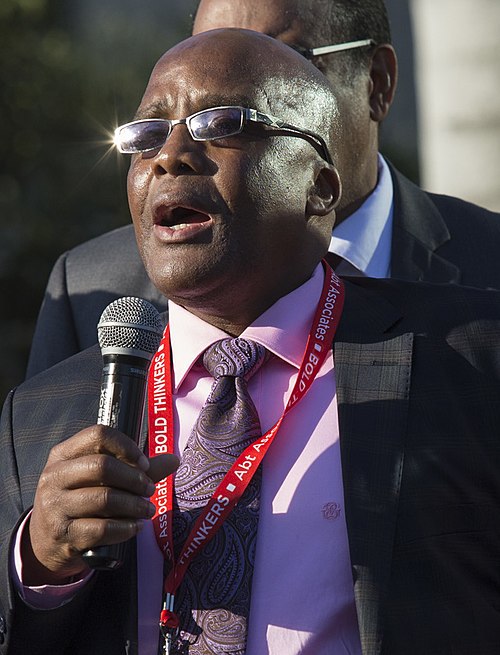
Aaron Motsoaledi
LP; Minister of Home Affairs
Abane Ramdane†
FLN Leader & Strategist
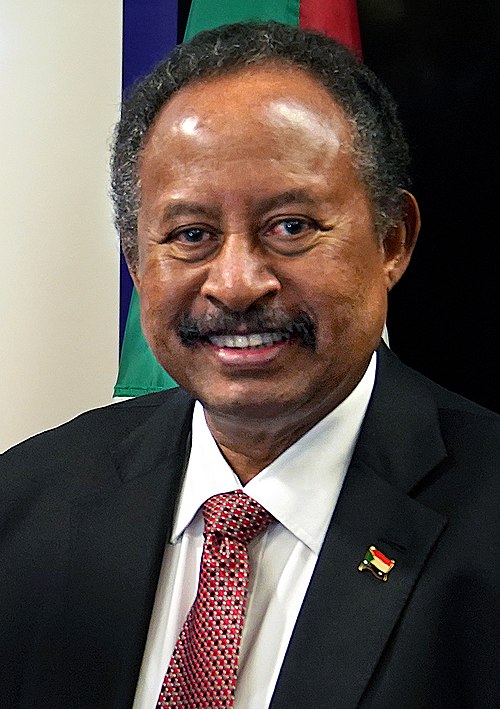
Abdalla Hamdok
Ex-Prime Minister
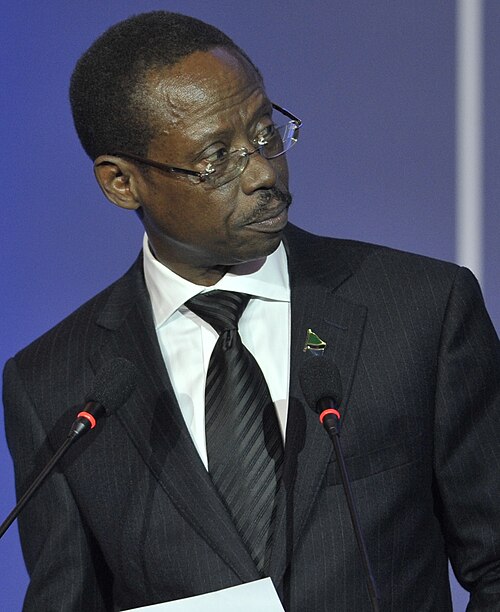
Abdallah Kigoda
Ex-Minister of Natural Resources