Financial Breakdown
Asset Distribution
Assets vs Liabilities
Assets
Disclaimer: These financial estimates are based on publicly available information and should be considered approximate. Last updated: 12/31/2025
Biography
Introduction: The Voice of a Nation
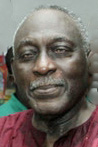
Prof. Kofi Awoonor† stands as one of the most significant and influential figures in the canon of African literature. A masterful Poet & Diplomat, his life and work bridged the profound depths of indigenous Ewe tradition and the complex realities of post-colonial Ghana and Africa. Born George Awoonor-Williams in 1935, he later adopted the name Kofi Awoonor, symbolizing a deep reconnection with his ancestral roots. His notable achievements span both the creative and political spheres; he was a celebrated author of poetry and prose, a respected academic, and a dedicated public servant who served as Ghana's ambassador to the United Nations. His tragic death in the 2013 Westgate shopping mall attack in Nairobi marked a profound loss for global Arts & Culture, but his literary voice remains a powerful testament to resilience, memory, and the African experience.
Early Life & Education: Roots in Wheta
Kofi Awoonor was born on March 13, 1935, in Wheta, in the Volta Region of what was then the Gold Coast. This region, home to the Ewe people, provided the foundational cultural and spiritual soil for his future work. He was raised by his grandmother, a traditional singer and storyteller, who immersed him in the rich oral traditions, dirges, and ritual poetry of the Ewe. This early exposure became the bedrock of his poetic sensibility, teaching him the rhythms, metaphors, and communal functions of language that would later distinguish his writing.
His formal education began at Achimota School, a prestigious institution that produced many of Ghana's future leaders. He then proceeded to the University of Ghana, Legon, where he studied English under the tutelage of another literary giant, Prof. J.H. Nketia. Here, Awoonor began to seriously synthesize his Ewe heritage with his academic studies. After graduating, he worked as a teacher and editor, and in 1964, he published his first major poetry collection, Rediscovery. His pursuit of knowledge led him abroad to the University of London, where he earned an MA in 1968, and later to the State University of New York at Stony Brook, where he completed a doctorate in comparative literature in 1972.
Career & Major Achievements: From Poetry to Diplomacy
The career of Prof. Kofi Awoonor† was a dynamic tapestry woven with threads of academia, literature, and statecraft. His literary output is his most enduring legacy.
Literary Accomplishments
Awoonor's poetry is renowned for its lyrical fusion of Ewe poetic structures with contemporary themes of alienation, identity, and socio-political critique. His early work, Rediscovery (1964), and the seminal Night of My Blood (1971), explore the "rediscovery" of African identity in the wake of colonialism. He famously employed the imagery of the "Songs of Sorrow" (adapted from Ewe dirges) to articulate both personal and collective anguish. Beyond poetry, he was also a accomplished novelist and critic. His novel, This Earth, My Brother (1971), is a powerful, experimental allegory of a nation's turbulent post-independence journey. Throughout his career, he authored over a dozen works, cementing his place as a pillar of African literature.
Academic and Diplomatic Service
As an academic, Prof. Kofi Awoonor† held several prestigious positions. He was a professor of comparative literature and served as the Chairman of the Department of English at the University of Cape Coast, Ghana. He also taught at universities in the United States, including Stony Brook. His foray into diplomacy was a natural extension of his intellectual commitment to his nation. Following the rise of Flight Lieutenant Jerry Rawlings, Awoonor entered public service. From 1990 to 1994, he served as Ghana's Permanent Representative to the United Nations, where he was known for his eloquent and principled advocacy for African issues. He later served as a Council of State member under President John Atta Mills. This unique dual identity as a Poet & Diplomat allowed him to articulate the soul of his people on both the page and the world stage.
- Key Publications: Rediscovery (1964), Night of My Blood (1971), This Earth, My Brother (1971), The House by the Sea (1978).
- Diplomatic Role: Ghana's Permanent Representative to the United Nations (1990-1994).
- Academic Leadership: Chairman, Department of English, University of Cape Coast.
Personal Life, Tragedy & Legacy
Prof. Kofi Awoonor was a family man, survived by his wife and children. His life was not without political peril; in 1975, he was imprisoned for alleged involvement in a coup plot, an experience he chronicled in The House by the Sea. This period of incarceration only deepened his resolve and thematic focus on freedom and justice. Tragically, his life was cut short on September 21, 2013. He was among the 67 victims killed by Al-Shabaab militants at the Westgate mall in Nairobi, Kenya, where he had gone to participate in the Storymoja Hay Festival, a celebration of writing and Arts & Culture. His death sent shockwaves across the globe, highlighting the senseless targeting of cultural figures.
The legacy of Prof. Kofi Awoonor† is immense. He is remembered as a poet who gave profound and beautiful expression to the African condition, weaving the ancient with the modern. His work continues to be studied in universities worldwide and inspires new generations of writers in Ghana and across the continent. The Kofi Awoonor Memorial Lectures and other tributes ensure his contributions to literature, academia, and national service are never forgotten. He remains a symbol of the intellectual and artistic excellence of Ghana.
Literary Estate & Lasting Value
While discussions of net worth are rarely appropriate for literary and diplomatic figures, the true value of Prof. Kofi Awoonor† lies in his immense cultural and intellectual capital. His primary "business" was the craft of writing and the service of his nation. The financial aspects of his career would have been derived from his academic salaries, book royalties, and his diplomatic appointments. However, his most significant assets are his published works, which continue to generate academic interest and sales. The management of his literary estate—the copyrights, manuscripts, and correspondence—holds both cultural and potential financial value for his heirs and for Ghana. This estate is a cornerstone of the nation's literary heritage, ensuring that the insights and artistry of this great Poet & Diplomat continue to educate, inspire, and enrich the global community of Arts & Culture for decades to come. His life's work is an invaluable, timeless contribution far beyond any monetary measure.
Further Reading & Sources: For those interested in exploring his work, primary sources include his published poetry collections and novels. Scholarly analyses can be found in academic journals dedicated to African literature. Reputable biographical information is available through resources like the Encyclopædia Britannica and the Poetry Foundation.
Net Worth Analysis
Prof. Kofi Awoonor was a renowned poet and diplomat, not a business figure, and he passed away in 2013. His wealth was not of a commercial nature and he is not on any financial rich list.
Quick Stats
Related People
Abasse Ndione
Novelist & Playwright
Abdel Rahman al-Abnudi†
Poet (Egypt-Sudan)
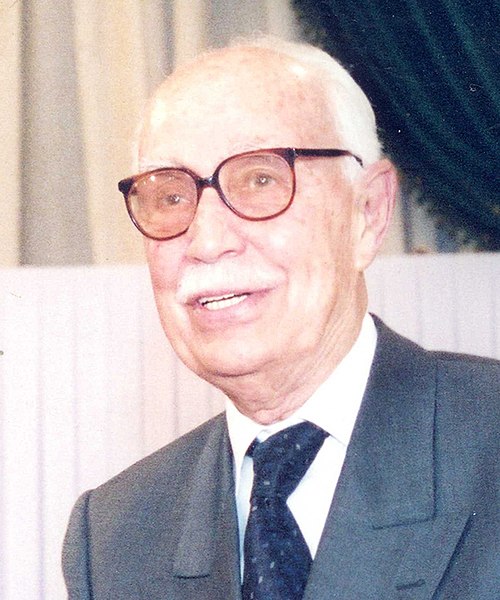
Abdelkrim Ghallab†
Novelist & Journalist
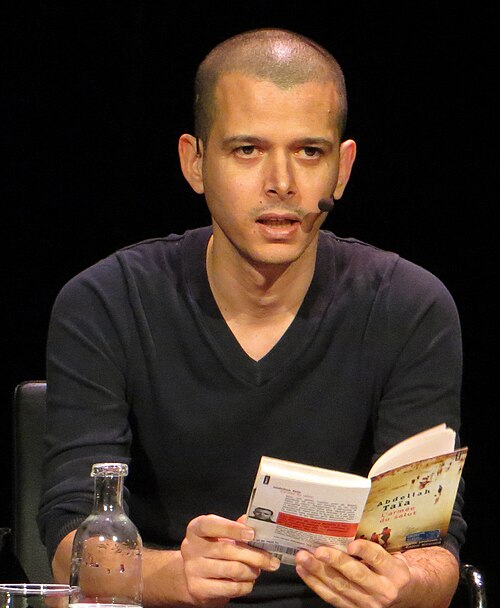
Abdellah Taïa
Novelist & Filmmaker