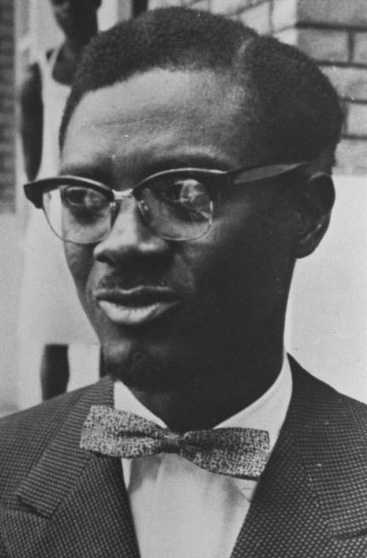
Biography
Introduction: The Voice of Congolese Independence
Patrice Lumumba† stands as one of the most iconic and consequential figures in the history of modern Africa. As the First Prime Minister of the newly independent Democratic Republic of the Congo in 1960, he embodied the fiery hope and defiant spirit of the continent's Independence Era. His political career, though tragically brief, was a seismic event in the Politics & Government of the 20th century, challenging colonial powers and neo-colonial ambitions with uncompromising calls for genuine sovereignty and pan-African unity. Lumumba's legacy is defined not only by his electrifying speech at the independence ceremony, which laid bare the brutalities of Belgian rule, but also by his brutal assassination in 1961, which cemented his status as a Martyr for African liberation. His life and death continue to resonate, symbolizing both the promise of self-determination and the perils of external interference.
Early Life & Education: The Making of a Nationalist
Patrice Émery Lumumba was born on July 2, 1925, in Onalua, in the Kasai province of the Belgian Congo. Raised in a Catholic family, he belonged to the Tetela ethnic group. His early education was in missionary schools, where he proved to be an exceptionally bright student. Unlike many of his contemporaries, Lumumba received a post-primary education, which was rare for Congolese under the rigidly discriminatory colonial system. He earned a certificate as a préposé, a type of medical assistant, and began working as a clerk and then a postal clerk in the colonial administration in Stanleyville (now Kisangani).
This position was formative. Working within the system, he witnessed its daily injustices and racial hierarchies firsthand. It was here that he began to develop his political consciousness. He immersed himself in reading, absorbing works on history, philosophy, and the principles of the French Revolution. Lumumba also became involved in writing, contributing articles to Congolese journals and co-founding a postal workers' union, his first foray into organized advocacy. A pivotal experience was his conviction for embezzlement in 1956—a charge many historians believe was politically motivated to silence him. His year-long prison sentence only deepened his resolve. Upon release, he joined the Liberal Party of Belgium and quickly became the party's president for the Congo, honing his organizational and oratorical skills before breaking away to form a truly national, mass-based political movement.
Career & Major Achievements: The Architect of Independence
Lumumba's political ascent was meteoric. In October 1958, he founded the Mouvement National Congolais (MNC), the Congo's first nationwide party that transcended ethnic and regional lines. His attendance at the All-African Peoples' Conference in Accra, Ghana, that same year was a watershed moment. Inspired by leaders like Kwame Nkrumah, he returned to the Congo a committed pan-Africanist and a more radical advocate for immediate independence.
The Path to Sovereignty
Lumumba mobilized massive popular support through his powerful speeches, which directly challenged Belgian authority. In January 1960, he was invited to a Round Table Conference in Brussels to discuss independence. His impassioned arguments were instrumental in forcing Belgium to set a swift date: June 30, 1960. In the May elections, the MNC won a plurality, and on June 24, Patrice Lumumba† was appointed the First Prime Minister and Minister of Defense, with Joseph Kasa-Vubu as President.
The Defining Speech and the Congo Crisis
His greatest public moment came at the independence ceremony on June 30. After King Baudouin of Belgium gave a speech praising colonialism and his own ancestor, King Leopold II, Lumumba delivered an unscripted, historic rebuttal. He spoke of the "suffering," "humiliation," and "forced labor" endured by Congolese under Belgian rule, declaring, "We are no longer your monkeys." This act of truth-telling shocked the international community and made him a hero across Africa but marked him as a dangerous figure to Western interests.
The crisis began almost immediately. The army mutinied, the mineral-rich province of Katanga, led by Moïse Tshombe and backed by Belgian business and military interests, seceded. Lumumba's appeals to the United Nations for help to crush the secession and expel Belgian troops were met with hesitation, as the UN refused to intervene in what it deemed an "internal conflict." Feeling betrayed, he turned to the Soviet Union for limited military aid, a move that placed him squarely in the crosshairs of the Cold War. The United States and Belgium, fearing a communist foothold in resource-rich Central Africa, conspired to remove him.
Downfall and Assassination
On September 5, 1960, President Kasa-Vubu, with Western backing, dismissed Lumumba. Lumumba, in turn, dismissed Kasa-Vubu, creating a constitutional stalemate. Colonel Joseph-Désiré Mobutu, with CIA support, staged his first coup on September 14, neutralizing the government. After a dramatic escape from house arrest in November, Lumumba was captured by Mobutu's troops on December 1. Despite widespread international protest, he was flown to Katanga on January 17, 1961, where he was brutally tortured and executed by a firing squad under the command of Katangan and Belgian officers. His body was dissolved in acid, a final attempt to erase his physical presence.
Personal Life & Legacy: The Enduring Symbol
Outside of politics, Patrice Lumumba† was a man of letters, a poet, and a devoted family man. He married Pauline Opangu in 1951, and they had five children. His personal integrity and modest lifestyle stood in stark contrast to the corruption that would later plague the country. He was known for his charisma, sharp intellect, and unwavering belief in a unified, sovereign Congo.
Lumumba's legacy is immense and multifaceted. He is the Martyr of Congolese and African independence, a symbol of the fight against colonialism and neo-colonialism. His assassination, for which Belgium has officially apologized in 2022 and the U.S. has acknowledged its "moral responsibility," remains a dark chapter in Cold War history. His vision of a strong, centralized, and pan-Africanist state continues to inspire political movements across the continent. Monuments to him stand in many countries, and his name is invoked in struggles for justice and true autonomy. In the Democratic Republic of the Congo, he remains the nation's foremost national hero, a foundational pillar of its modern identity.
Net Worth & Business Ventures
Unlike many political figures, Patrice Lumumba† did not accumulate personal wealth or engage in significant business ventures. His life was dedicated to political activism and public service during a period of intense struggle, leaving no room for personal financial empire-building. His primary "capital" was his immense popularity and ideological influence. Any discussion of his net worth is therefore not relevant in a traditional sense. His economic focus was entirely on the national level, advocating for the Congo to control its own vast natural resources—including copper, cobalt, and diamonds—for the benefit of its entire people, rather than for foreign corporations or a small local elite. This economic nationalism was a core tenet of his political platform and a key reason for the opposition he faced from international business interests. His legacy is one of ideological, not material, wealth, shaping the economic debates of post-colonial Africa.
Key Facts & Timeline
- Born: July 2, 1925, Onalua, Belgian Congo.
- Founded MNC: October 1958.
- Independence Day: June 30, 1960. Lumumba becomes Prime Minister.
- Historic Speech: June 30, 1960.
- Dismissed: September 5, 1960.
- Assassinated: January 17, 1961, in Katanga.
- Official Belgian Apology: 2022.
For further reading on the life and impact of Patrice Lumumba†, consider visiting the Encyclopedia Britannica or exploring declassified documents from the U.S. National Archives related to the Congo Crisis.
Net Worth Analysis
Patrice Lumumba was assassinated in 1961 and therefore has no personal net worth in 2024.
Quick Stats
Related People
Aaron Motsoaledi
LP; Minister of Home Affairs
Abane Ramdane†
FLN Leader & Strategist
Abdalla Hamdok
Ex-Prime Minister
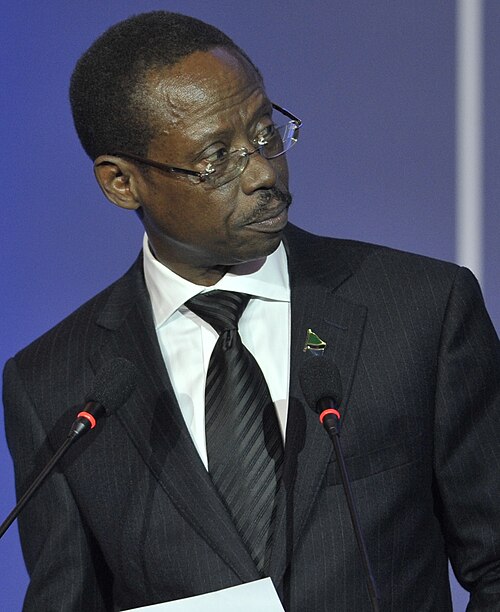
Abdallah Kigoda
Ex-Minister of Natural Resources