Financial Breakdown
Asset Distribution
Assets vs Liabilities
Assets
Disclaimer: These financial estimates are based on publicly available information and should be considered approximate. Last updated: 12/29/2025
Biography
Introduction: The Father of Nigerian Nationalism
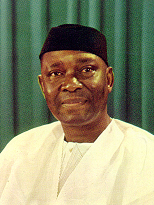
In the annals of Politics & Government in Africa, few names resonate as profoundly as that of Nnamdi Azikiwe†. Revered as "Zik of Africa" or simply "Zik," he stands as a colossus in the struggle for Nigeria's independence and its subsequent birth as a republic. Nnamdi Azikiwe† was not only the First President of Nigeria but also a pioneering journalist, a formidable political strategist, and a Pan-Africanist whose vision extended far beyond the borders of his homeland. His most notable achievement was serving as the inaugural President of Nigeria from 1963 to 1966, following his tenure as the last Governor-General of the Federation. As a central figure of the Independence Era, Azikiwe's relentless advocacy for self-rule, his intellectual prowess, and his ability to mobilize the masses were instrumental in ending colonial rule and shaping the early trajectory of the most populous nation in Africa.
Early Life & Education: The Making of "Zik"
Nnamdi Azikiwe† was born on November 16, 1904, in Zungeru, a town in present-day Niger State, Northern Nigeria. His father, Obed-Edom Chukwuemeka Azikiwe, was a clerk in the British colonial administration, which exposed the young Azikiwe to a diverse, multilingual environment. He was fluent in Hausa, Igbo, and Yoruba from an early age, a linguistic dexterity that would later serve his unifying political vision. After completing his early education in Onitsha and Lagos, Azikiwe worked as a clerk for the Nigerian Treasury, but his thirst for knowledge was unquenchable.
In 1925, he embarked on a transformative journey to the United States, a decision that would define his intellectual and political outlook. He attended Howard University, Lincoln University (where he graduated with a degree in Political Science in 1930), and the University of Pennsylvania, where he earned a Master's degree in Anthropology and Religion. In America, he was exposed to the realities of racial segregation and the ideas of the Harlem Renaissance, Marcus Garvey, and other Black intellectuals. These experiences forged his Pan-African consciousness and his determination to challenge colonial domination. He worked various jobs, including as a coal miner and a boxer, developing a resilience that would characterize his future political struggles.
Career & Major Achievements: Architect of a Nation
The career of Nnamdi Azikiwe† is a tapestry woven from journalism, political activism, and statecraft. Upon returning to Africa in 1934 (first to Ghana, then Nigeria in 1937), he launched a formidable career in journalism. He founded and edited newspapers like the West African Pilot, which became a powerful megaphone for anti-colonial sentiment. His fiery editorials, advocating for independence and social justice, earned him the admiration of the masses and the ire of the British authorities.
Political Ascendancy and the Fight for Independence
Azikiwe transitioned seamlessly from media to direct political action. In 1944, he co-founded the National Council of Nigeria and the Cameroons (NCNC), which became one of the two major political parties in the fight for independence, alongside the Northern People's Congress (NPC). He served as the NCNC's president from 1946 until Nigeria's independence. His political philosophy, often termed "Zikism," was a blend of nationalism, Pan-Africanism, and spiritual balance. He was elected to the Legislative Council of Nigeria in 1947 and later became the Premier of the Eastern Region in 1954, where he focused on education and economic development.
The crowning political achievement for Nnamdi Azikiwe† came in 1960. When Nigeria gained its independence on October 1, 1960, he was appointed Governor-General, a ceremonial head of state representing the British monarch. However, his ultimate goal was a sovereign republic. On October 1, 1963, when Nigeria transitioned to a republic, Nnamdi Azikiwe† was elected by Parliament as the First President of Nigeria, a role he held until the military coup of January 15, 1966. His presidency, though largely ceremonial within a parliamentary system, symbolized the full realization of national sovereignty.
Key Accomplishments and Impact
Beyond the presidency, Azikiwe's impact was multifaceted:
- Intellectual Foundation: He authored numerous books and essays that articulated a philosophical basis for African liberation and self-governance.
- Educational Advocate: A staunch believer in education, he was a founding figure and first Chancellor of the University of Nigeria, Nsukka (1960), a project dear to his heart.
- Pan-African Leadership: He was a leading voice in the Pan-African movement, advocating for continental unity and solidarity among newly independent states.
- Political Resilience: Despite political setbacks and the regional tensions of the First Republic, he remained a symbol of national unity until the collapse of democratic rule in 1966.
Personal Life, Legacy & Later Years
In his personal life, Nnamdi Azikiwe† was known for his discipline, intellectual rigor, and love for sports, particularly boxing and football. He was married to Flora Ogbenyeanu Ogoegbunam in 1936, and they had children together. After her passing, he remarried. His personal interests in history and philosophy were evident in his writings and speeches. Following the civil war (1967-1970), he played a reconciliatory role, advocating for national healing. He made an unsuccessful bid for the presidency in 1979 and 1983 under the Second Republic.
The legacy of Nnamdi Azikiwe† is immortal. He is universally recognized as one of the founding fathers of modern Nigeria. His face adorns the Nigerian ₦500 banknote, and numerous institutions, including airports and universities, bear his name. His vision for a united, educated, and self-reliant Nigeria continues to inspire generations. Nnamdi Azikiwe† passed away on May 11, 1996, at the age of 91, after a brief illness. He was buried in his hometown of Onitsha, leaving behind a legacy as the indispensable "Zik of Africa."
Net Worth & Business Ventures
While precise figures are not publicly documented in a modern sense, Nnamdi Azikiwe† was a successful entrepreneur alongside his political and journalistic careers. His business acumen was demonstrated through his ownership and management of the Zik Group of Newspapers, which included the influential West African Pilot. This media empire was not only a platform for his political ideology but also a significant commercial enterprise. Furthermore, he had investments in other sectors, including real estate. It is important to view his financial success within the context of his era and primary mission; for Azikiwe, wealth creation was often intertwined with nation-building and providing economic examples for an emerging Nigeria. His resources supported his political activities, his extensive travels, and his philanthropic interests, particularly in education.
Sources & Further Reading: Information for this biography is drawn from authoritative historical texts, official Nigerian archives, and documented accounts of Nigeria's Independence Era. Key references include Azikiwe's autobiography, "My Odyssey," and historical analyses of Nigerian Politics & Government. For verification of specific facts and dates, reputable sources such as the Encyclopaedia Britannica entry on Nnamdi Azikiwe and the National Archives of Nigeria provide valuable context.
Net Worth Analysis
Nnamdi Azikiwe was a political leader, not a business figure, and he died in 1996, making a 2024 net worth assessment inapplicable.
Quick Stats
Related People
Aaron Motsoaledi
LP; Minister of Home Affairs
Abane Ramdane†
FLN Leader & Strategist
Abdalla Hamdok
Ex-Prime Minister
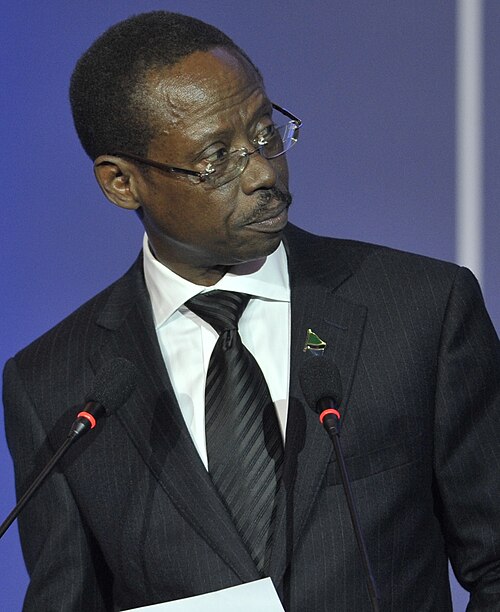
Abdallah Kigoda
Ex-Minister of Natural Resources