$5M
Estimated Net Worth
As of 2024 • high confidence
Financial Breakdown
Asset Distribution
Assets vs Liabilities
Assets
Disclaimer: These financial estimates are based on publicly available information and should be considered approximate. Last updated: 12/29/2025
Biography
Introduction: A Defining Figure in Nigerian Politics
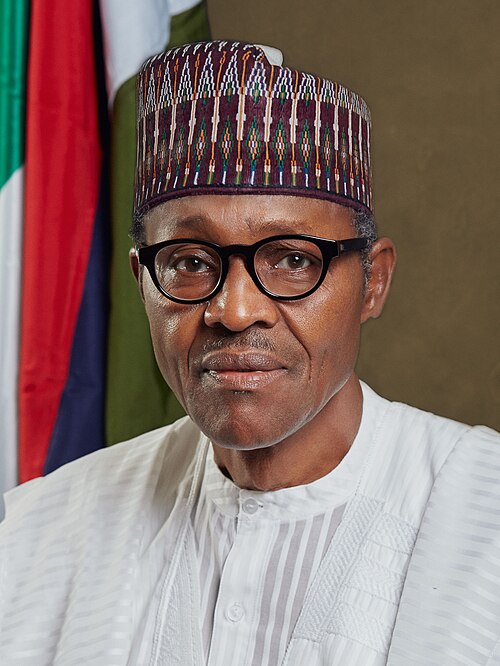
Muhammadu Buhari stands as one of the most consequential and polarizing figures in modern Nigerian history. His unique trajectory, serving as a military head of state in the 1980s and later as a democratically elected president from 2015 to 2023, offers a profound lens through which to examine Nigeria's complex journey through military and civilian rule. A retired major general in the Nigerian Army, Buhari first came to national prominence following a military coup in December 1983. Decades later, his election as the Ex-President of Nigeria in 2015 marked a historic moment, being the first time an opposition candidate unseated an incumbent president in the country's electoral history. His tenure was largely defined by a relentless anti-corruption crusade, a tough stance on national security, and ambitious economic policies aimed at diversifying Nigeria's oil-dependent economy.
Early Life & Education: Formative Years in Northern Nigeria
Muhammadu Buhari was born on December 17, 1942, in Daura, Katsina State, in the far north of what was then British-ruled Nigeria. Hailing from the Fulani ethnic group, his early life was rooted in the traditions and discipline of his community. His initial education was in the traditional Islamic system before he attended primary and secondary schools in Katsina. Buhari's formative years coincided with Nigeria's struggle for and eventual attainment of independence in 1960, an era that shaped his sense of patriotism and service.
His path toward a military career began in 1962 when he joined the Nigerian Military Training College in Kaduna. Demonstrating promise, he was selected for further training at the prestigious Mons Officer Cadet School in Aldershot, England. This overseas training was pivotal, providing him with a rigorous military foundation. Upon his return, Buhari was commissioned as a second lieutenant and steadily climbed the ranks. He furthered his military education by attending the Nigerian Defence Academy and the United States Army War College, solidifying his expertise in warfare and military strategy. These experiences forged a leader known for discipline, austerity, and a strict, no-nonsense approach—traits that would later define his political persona.
Career & Major Achievements: From Soldier to Statesman
The career of Muhammadu Buhari is distinctly divided into two eras: his military leadership and his civilian presidency, both under the broad umbrella of Politics & Government in Nigeria.
Military Rule and the War Against Indiscipline (1983-1985)
On December 31, 1983, Major General Muhammadu Buhari led a military coup that toppled the democratically elected but notoriously corrupt government of President Shehu Shagari. Citing economic mismanagement and a decline in moral standards as justifications, Buhari's regime immediately imposed a strict authoritarian rule. His government launched the famed "War Against Indiscipline" (WAI), a campaign to enforce public order, queue culture, and anti-littering laws through military decrees. While economically, his policies attempted to stabilize the nation's finances, his rule was also marked by severe restrictions on press freedom and civil liberties. His government was itself overthrown in a palace coup led by General Ibrahim Babangida in August 1985, after which Buhari was detained for several years.
The Democratic Pursuit and Historic Election (2003-2015)
After Nigeria's return to civilian rule in 1999, Muhammadu Buhari transitioned into a democratic politician. He contested and lost the presidential elections in 2003, 2007, and 2011, each time alleging widespread electoral fraud. His persistence culminated in the 2015 presidential election, where, as the candidate of the All Progressives Congress (APC), he defeated the incumbent Goodluck Jonathan. This victory was a landmark for Nigerian democracy.
Presidential Tenure: Key Policies and Challenges (2015-2023)
Buhari's two-term presidency was anchored on three core pillars: security, economy, and anti-corruption.
- Security: He prioritized the fight against the militant Islamist group Boko Haram, reclaiming territory and degrading the group's capacity, though sporadic attacks persisted. His administration also grappled with rising farmer-herder conflicts and separatist agitations.
- Anti-Corruption: The establishment of the Presidential Advisory Committee Against Corruption (PACAC) and high-profile prosecutions signaled a strong stance. However, critics argued the fight was selective and the results mixed.
- Economy: Key initiatives included the launch of the "Anchor Borrowers’ Programme" to boost agricultural production, investments in critical infrastructure like railways and roads, and the controversial closure of land borders to encourage local production. The economy, however, experienced two recessions (in 2016 and 2020), high inflation, and a growing debt burden, partly exacerbated by falling oil prices and the COVID-19 pandemic.
Personal Life & Legacy
Muhammadu Buhari is known for his austere and Spartan personal lifestyle, a reputation he cultivated since his military days. He is a devout Muslim who performed the Hajj pilgrimage. He is married to Aisha Buhari, an outspoken advocate for women's and children's rights, with whom he has children. He also has children from his previous marriage to the late Safinatu Buhari. His personal interests are reported to be modest, centered around reading, farming, and his family.
The legacy of Muhammadu Buhari is complex and subject to intense debate. To his supporters, he is an incorruptible patriot who fought tirelessly to sanitize Nigeria's public life and secure the nation. They point to infrastructure projects, agricultural reforms, and his personal integrity as enduring positives. To his critics, his tenure was marked by economic hardship, heightened insecurity in some regions, and a perceived slowness in governance. Nonetheless, his impact on the Nigerian political landscape is undeniable. He demonstrated that a former military ruler could submit to the democratic process and, through perseverance, achieve the highest electoral office. His life embodies the turbulent interplay between Military & Civilian Rule in Africa's most populous nation.
Net Worth & Business Ventures
Unlike many of his contemporaries, Muhammadu Buhari has consistently projected an image of modest means. His declared assets have been a subject of public record, particularly during his electoral campaigns where he positioned himself as a frugal alternative. In 2015, he publicly declared owning a portfolio that included a house in Abuja, a farm in Daura, a limited number of cars, and livestock. He stated he had less than 30 million Naira (about $150,000 at the time) in his bank account. His primary source of income throughout his life has been his salary from military service and later his presidential earnings. There is no public evidence of significant private business ventures or conglomerates owned by him, a fact often highlighted by his supporters to underscore his perceived financial discipline and contrast with the opulence associated with some Nigerian politicians. His net worth remains a topic of speculation, but by his own declarations and public perception, it is not considered to be amongst the vast fortunes associated with some former Nigerian leaders.
For further reading on the history of Nigerian leadership, you can visit reputable sources like the Encyclopædia Britannica or the official Nigeria State House website for archival information.
Net Worth Analysis
Muhammadu Buhari is not a billionaire; his wealth is primarily from his public service salary and pensions, with no evidence of major business holdings or inclusion on any billionaire list.
Quick Stats
Related People
Aaron Motsoaledi
LP; Minister of Home Affairs
Abane Ramdane†
FLN Leader & Strategist
Abdalla Hamdok
Ex-Prime Minister
Abdallah Kigoda
Ex-Minister of Natural Resources