Financial Breakdown
Asset Distribution
Assets vs Liabilities
Assets
Liabilities
Disclaimer: These financial estimates are based on publicly available information and should be considered approximate. Last updated: 12/30/2025
Biography
Introduction: The Architect of Katanga's Secession
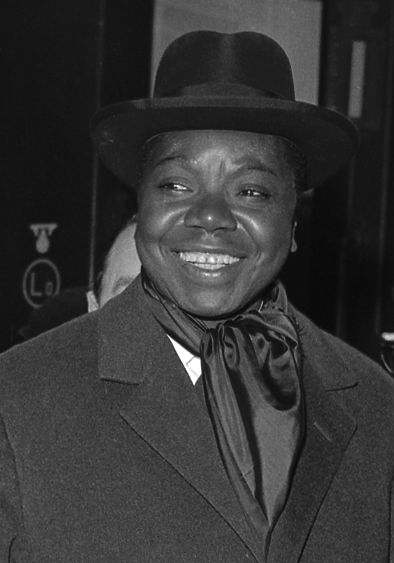
Moise Tshombe† remains one of the most polarizing and significant figures in the tumultuous post-independence history of the Democratic Republic of the Congo. Primarily known as the Ex-PM & Katanga Leader, Tshombe rose to international prominence as the President of the secessionist State of Katanga from 1960 to 1963. His political career was defined by his fervent advocacy for regional autonomy, his complex alliances with Western business interests and foreign powers, and his direct opposition to the central government in Léopoldville (now Kinshasa). A key player in the Secessionist Era, Tshombe's actions plunged the newly independent nation into a deep crisis, contributing to the Congo Crisis that would claim hundreds of thousands of lives. His later, brief tenure as Prime Minister of the entire Congo Republic added a layer of irony to his legacy, cementing his reputation as a shrewd, controversial, and ultimately tragic figure in African Politics & Government.
Early Life & Education: The Making of a Provincial Elite
Moise Kapenda Tshombe was born on November 10, 1919, in Musumba, Belgian Congo, into a wealthy and influential family. His father was a successful businessman, among the first Congolese to own a series of retail stores, which placed the Tshombes in the upper echelon of Congolese society under colonial rule. This privileged background afforded Moise Tshombe† educational opportunities inaccessible to most Congolese. He was educated at the American Methodist Missionary School and later attended an official school for training African clerks in the capital, Léopoldville.
His formative experiences were deeply rooted in the Katanga province, a region geographically distant and culturally distinct from the lower Congo. The Tshombe family belonged to the Lunda ethnic group, which had a history of a powerful pre-colonial kingdom. This instilled in him a strong sense of Katangan, and particularly Lunda, identity. After his education, he returned to Katanga to manage the family's business empire, which expanded to include transportation, retail, and other ventures. This commercial success made him a pillar of the provincial economy and connected him intimately with the powerful mining interests, primarily the Belgian-owned Union Minière du Haut-Katanga. His business acumen and elite status positioned him perfectly for a political career, as he understood the economic levers of Katanga and cultivated relationships with both the traditional Lunda aristocracy and the Belgian industrialists.
Career & Major Achievements: From Secessionist to Prime Minister
Tshombe's political career accelerated as the Belgian Congo moved towards independence. In 1959, he helped found the Confédération des Associations Tribales du Katanga (CONAKAT), a political party advocating for a federal Congo with substantial autonomy for Katanga. CONAKAT's platform was supported by Belgian settlers and the mining company, who feared central government control over the province's vast mineral riches. When independence arrived chaotically on June 30, 1960, and the central government, led by Prime Minister Patrice Lumumba, descended into instability, Tshombe saw his chance.
The Secession of Katanga (1960-1963)
On July 11, 1960, merely eleven days after independence, Moise Tshombe† declared the independence of the State of Katanga. This act of secession was the defining event of his life. With the covert political, military, and financial backing of Belgium and Union Minière, Tshombe established a functioning, though unrecognized, state in Elisabethville (now Lubumbashi). He served as its president, creating his own gendarmerie, which was stiffened by European mercenaries. The secession triggered the Congo Crisis, leading to United Nations military intervention. Tshombe's government fiercely resisted UN and Congolese national army attempts at reintegration, resulting in prolonged and bloody conflict. His major "achievement" during this period was maintaining Katanga's de facto independence for nearly three years, preserving its economic output for the benefit of its foreign backers and local elite.
Prime Minister of the Congo (1964-1965)
In a stunning political reversal, after the collapse of Katanga and his exile, Moise Tshombe† was recalled in 1964 by President Joseph Kasa-Vubu to serve as Prime Minister of the entire Democratic Republic of the Congo. His mandate was to quell the Simba rebellions that threatened the state. Tshombe employed similar tactics as in Katanga, recruiting white mercenaries and leveraging his Western connections for military support. He achieved significant, if brutal, military success in suppressing the eastern rebellions. During his tenure, he also founded a new national political party, the Congolese National Convention (CONACO). However, his power and popularity, particularly with the West, alarmed President Kasa-Vubu and Army Chief Joseph-Désiré Mobutu. In October 1965, Kasa-Vubu dismissed him from the premiership. This political maneuvering created a stalemate that provided the pretext for Mobutu's coup d'état on November 25, 1965, which ended Congo's brief democratic experiment.
Personal Life, Exile, & Legacy
Outside of politics, Moise Tshombe† was a devout Methodist and a family man. His personal interests were intertwined with his business and political endeavors. Following Mobutu's coup, he was forced into exile once again, first to Spain. His legacy is profoundly contested. To some, particularly in his Katangan heartland, he is remembered as a champion of federalism and regional rights against a chaotic and oppressive central government. To many others across the Congo and Africa, he is viewed as a puppet of neocolonial interests, whose secession fractured the nation and whose use of foreign mercenaries set a dangerous precedent.
His tragic end sealed this controversial legacy. In 1967, he was sentenced to death in absentia by the Mobutu regime. That same year, his plane was hijacked and diverted to Algeria, where he was placed under house arrest by the government of President Houari Boumedienne. Despite international appeals, he remained imprisoned. Moise Tshombe† died of a reported heart attack in Algiers on June 29, 1969, at the age of 49. His body was never repatriated to the Congo. His legacy lives on as a symbol of the enduring tensions between central authority and regional autonomy, and of the destructive role of external interference in African Politics & Government.
Net Worth & Business Ventures
While precise figures are unverifiable, Moise Tshombe† was undoubtedly one of the wealthiest Congolese of his generation, and his financial standing was inextricably linked to his political power. His wealth originated in the extensive family business network built by his father, which included:
- A chain of retail stores across Katanga.
- Investments in transportation and real estate.
- Strong commercial ties with Belgian mining and industrial firms.
His political career, particularly as Katanga's secessionist leader, further intertwined his fortune with the province's economy. The treasury of the State of Katanga was effectively managed in concert with the interests of the Union Minière du Haut-Katanga, and Tshombe's administration controlled the flow of vast copper and cobalt revenues. This access to state resources, combined with his pre-existing business empire, suggests a significant personal net worth. However, his exile and assets being seized by the central Congolese government following the end of the secession likely diminished his wealth considerably in his final years.
Net Worth Analysis
Moise Tshombe died in 1969 and had no known significant personal wealth; his historical role was political, not commercial.
Quick Stats
Related People
Aaron Motsoaledi
LP; Minister of Home Affairs
Abane Ramdane†
FLN Leader & Strategist
Abdalla Hamdok
Ex-Prime Minister
Abdallah Kigoda
Ex-Minister of Natural Resources