Biography
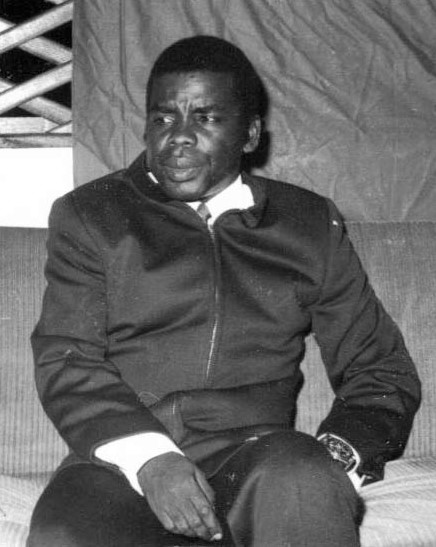
In the turbulent landscape of post-colonial African Politics & Government, few figures embody the revolutionary fervor and complex legacy of Marien Ngouabi†. As the Ex-President (1968-1977) of the Republic of the Congo, Ngouabi stands as a pivotal architect of the nation's socialist path and a symbol of both radical transformation and enduring political strife. His ascent to power in 1968 marked a definitive break from the country's first regime, leading to the creation of Africa's first self-declared Marxist-Leninist state, the People's Republic of the Congo. This biography explores the life, ideology, and controversial tenure of Marien Ngouabi†, a military officer turned president whose vision for a socialist Congo continues to influence the nation's political identity decades after his assassination in 1977.
Early Life & Military Education
Marien Ngouabi† was born on December 31, 1938, in the village of Ombele, near Owando, in the northern region of what was then French Equatorial Africa. Hailing from the Kouyou ethnic group, his early life was shaped in a colonial context. Demonstrating academic promise, he pursued an education that would lead him into the military, a common path for ambitious young men in the waning years of colonial rule. He attended the prestigious École des Enfants de Troupe in Brazzaville and later the École des Cadets in Bouar, Ubangi-Shari (present-day Central African Republic).
His military training continued in France, where he attended the Saint-Cyr Military Academy in Coëtquidan and the École d'Application d'Infanterie in Saint-Maixent-l'École. This elite French military education provided him with technical expertise and a strategic worldview, but it also exposed him to the political ideologies circulating in a world defined by anti-colonial struggles and the Cold War. Returning to the Congo as a second lieutenant in 1962, just two years after the country's independence, Marien Ngouabi† entered an army that was becoming an increasingly politicized institution, setting the stage for his future role in the nation's governance.
Career & Major Achievements: Forging a Socialist State
The political career of Marien Ngouabi† is inextricably linked to the military's intervention in Congolese politics. Discontent with the government of President Alphonse Massamba-Débat and its civilian militia, the Défense Civile, grew within the army. As commander of the paratrooper brigade based in Brazzaville, Captain Ngouabi became a central figure in this dissent. After a period of political crisis, he led a bloodless coup d'état on August 31, 1968, establishing the Conseil National de la Révolution (CNR) and eventually assuming the presidency on January 1, 1969.
The People's Republic and the PCT
His most significant achievement was the proclamation, on December 31, 1969, of the People's Republic of the Congo. This act formally aligned the country with scientific socialism, making it the first Marxist-Leninist state in Africa. To institutionalize this shift, Ngouabi founded the Congolese Party of Labour (Parti Congolais du Travail, PCT), which was declared the sole legal political party, with its ideology guiding all state action. The constitution of 1973 cemented this one-party socialist system, centralizing power within the PCT and the state.
Domestic Policy and International Alignment
Domestically, Ngouabi's government pursued policies of nationalization, particularly in the agricultural and extractive sectors. While aiming for economic independence, the economy remained heavily reliant on oil revenue, a dependency that shaped the country's trajectory. His rule was also marked by persistent internal opposition and attempts to balance various political and ethnic factions within the PCT and the military. Internationally, Marien Ngouabi† positioned the Republic of the Congo firmly within the Soviet bloc during the Cold War. He maintained strong ties with the USSR, China, and Cuba, while also being a vocal supporter of liberation movements across Southern Africa, offering training and support to groups like the MPLA in Angola.
The "Three Glorious" Days and Political Consolidation
A critical moment in his presidency was the suppression of a coup attempt in February 1972, led by former President Massamba-Débat and others. This event, known as the "Three Glorious" Days, was followed by a significant political purge. Ngouabi emerged with consolidated power, but the political atmosphere remained tense, characterized by suspicions of plots and the heavy-handed role of the security apparatus.
Personal Life, Assassination, and Enduring Legacy
Compared to his very public political life, details of Marien Ngouabi†'s personal life are less documented. He was known as a disciplined military man whose personal interests were largely subsumed by his political revolutionary project. His life was cut short tragically and violently on March 18, 1977, when he was assassinated at the presidential residence in Brazzaville. The circumstances of his murder remain shrouded in mystery and controversy, leading to a series of trials and executions, including that of former President Massamba-Débat.
The legacy of Marien Ngouabi† is profound and multifaceted. He is officially revered as a martyr of the Congolese revolution. His image is displayed publicly, his name adorns the country's main university and its largest military base, and the anniversary of his death is a national day of remembrance. He fundamentally reshaped the ideological orientation of the Republic of the Congo, leaving a constitutional and political framework centered on the PCT that endured long after his death, even through subsequent multi-party transitions. For many, he represents the assertive, revolutionary spirit of a newly independent Africa. However, his legacy is also debated, with critics pointing to the authoritarian nature of his one-party state and the political instability that characterized and followed his rule.
Net Worth & Financial Context of a Socialist Leader
Assessing the personal net worth of a socialist revolutionary like Marien Ngouabi† is challenging and differs fundamentally from analyzing capitalist business leaders. As the president of a Marxist-Leninist state that advocated for the abolition of private capital accumulation, his personal wealth was not a matter of public record or a focus of his political persona. His economic policies focused on state ownership and collective control of the means of production, notably the vital oil sector. Therefore, any discussion of "net worth" in the traditional sense is largely inapplicable. His financial context was one of state control, where resources were managed by the government and the ruling Congolese Party of Labour (PCT). Unlike presidents in market economies, there were no personal business ventures or publicly traded assets associated with Marien Ngouabi†. His power derived from his control of the state and party apparatus, not from private commercial wealth, aligning with the ideological principles he promoted during his tenure as Ex-President (1968-1977).
Key Facts and Timeline
- Birth: December 31, 1938, Ombele, French Equatorial Africa.
- Military Training: Educated at Saint-Cyr Military Academy, France.
- Coup d'État: Seized power on August 31, 1968.
- Presidency: Served as President from January 1, 1969, to March 18, 1977.
- Major Achievement: Proclaimed the People's Republic of the Congo on December 31, 1969.
- Political Party: Founder of the Congolese Party of Labour (PCT).
- Assassination: Killed on March 18, 1977, in Brazzaville.
- Official Legacy: Honored as a National Martyr; Université Marien Ngouabi named in his honor.
For further reading on the political history of the region during this era, credible sources include the Encyclopædia Britannica and academic works on post-colonial African Politics & Government.
Net Worth Analysis
Marien Ngouabi was assassinated in 1977; he was a military leader and head of state, not a business figure, and no credible sources report a personal net worth.
Quick Stats
Related People
Aaron Motsoaledi
LP; Minister of Home Affairs
Abane Ramdane†
FLN Leader & Strategist
Abdalla Hamdok
Ex-Prime Minister
Abdallah Kigoda
Ex-Minister of Natural Resources