Financial Breakdown
Asset Distribution
Assets vs Liabilities
Assets
Disclaimer: These financial estimates are based on publicly available information and should be considered approximate. Last updated: 12/29/2025
Biography
Introduction: The Philosopher-President
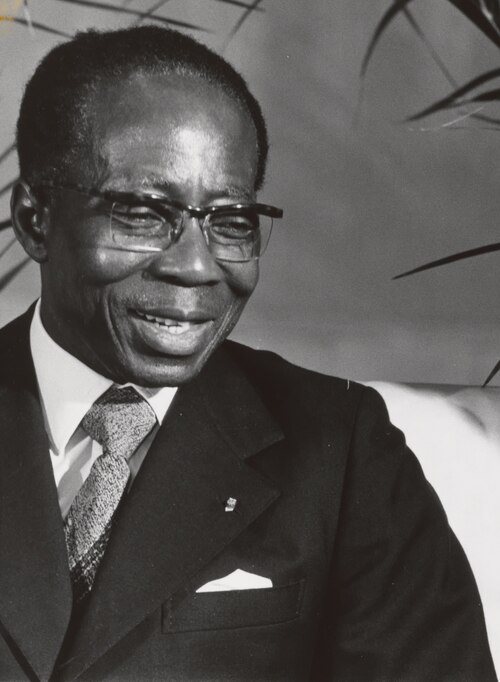
Léopold Sédar Senghor† stands as a monumental figure in 20th-century history, uniquely bridging the worlds of Politics & Government and profound artistic expression. He was the first President of the Republic of Senegal, serving from 1960 to 1980, and is globally celebrated as a poet, cultural theorist, and statesman. His life's work was dedicated to articulating and affirming the value of African culture and identity in the face of colonialism. Senghor's key achievement was not merely leading Senegal to independence, but doing so with an unprecedented intellectual framework: he championed the concept of "Négritude"—a literary and ideological movement affirming Black African heritage—and advocated for a pragmatic, moderate socialism and a policy of dialogue between civilizations. As a First President & Poet, he remains a symbol of the harmonious fusion of political power and cultural depth, leaving an indelible mark on post-colonial Africa and the Francophone world.
Early Life & Education: From Joal to the Sorbonne
Roots in the Serer Kingdom
Léopold Sédar Senghor† was born on October 9, 1906, in the small coastal town of Joal, in what was then French West Africa. He was born into a prosperous Serer family; his father was a Catholic merchant, and his mother came from a noble Muslim lineage. This dual religious and cultural heritage profoundly influenced his later philosophy of synthesis and openness. His early education began at a Catholic mission in Ngazobil before he attended the Libermann Seminary and the Lycée Van Vollenhoven in Dakar, where he excelled academically.
Formative Years in Paris
In 1928, at the age of 22, Senghor arrived in Paris on a scholarship to continue his studies. This move was the pivotal turning point in his life. He attended the prestigious Lycée Louis-le-Grand and later the Sorbonne, becoming the first African to become an agrégé (the highest teaching qualification) in French grammar. In the intellectual ferment of 1930s Paris, he met fellow students Aimé Césaire from Martinique and Léon Damas from French Guiana. Together, they forged the revolutionary concept of Négritude. For Senghor, this was not a rejection of France or Europe, but a powerful assertion of the emotional, spiritual, and artistic values inherent to African civilizations. His academic and poetic work during this period laid the intellectual foundation for his future political career.
Career & Major Achievements: From Poetry to Presidency
The Path to Political Leadership
Senghor's political career began after World War II, during which he spent two years in a German prison camp. In 1945, he was elected as a deputy from Senegal to the French National Assembly, becoming a key figure in drafting the constitution of the French Fourth and Fifth Republics. He served as a minister in several French governments under Prime Minister Edgar Faure. As decolonization movements gained momentum, Senghor advocated for a federal structure for French West Africa. When this failed, he focused on leading Senegal, first as President of the Legislative Assembly and then, on September 5, 1960, as the nation's First President upon independence.
Presidency and the "Senghorian Model"
As President, Léopold Sédar Senghor† pursued a distinctive path. His 20-year presidency (1960-1980) was characterized by:
- Political Stability: He established a de facto one-party state under the Union Progressiste Sénégalaise (UPS), but maintained a remarkable degree of social peace and avoided the military coups common in the region.
- Economic Pragmatism: He practiced a form of "African Socialism," which combined state planning with a welcoming attitude towards French investment and technical assistance.
- Cultural Diplomacy: He made culture a cornerstone of national and foreign policy, famously stating, "Culture is the beginning and the end of all things." He founded institutions like the Fundamental Institute of Black Africa (IFAN) and the World Festival of Negro Arts in 1966.
- Peaceful Transition: In a rare act for an African leader of his era, he voluntarily retired from politics in 1980, handing power to his chosen successor, Abdou Diouf.
Literary Immortality
Parallel to his political life, Senghor's literary output was prolific and groundbreaking. His poetry collections, such as Chants d'Ombre (1945), Hosties noires (1948), and Éthiopiques (1956), are celebrated for their lyrical beauty, rhythmic innovation drawn from African traditions, and profound themes of exile, memory, and reconciliation. In 1964, he published the seminal theoretical work, Liberté 1: Négritude et Humanisme. The ultimate recognition of his literary genius came in 1984 when he became the first African to be elected to the Académie française, France's preeminent body for matters pertaining to the French language.
Personal Life & Legacy: The Lasting Impact of a Visionary
Léopold Sédar Senghor† married Ginette Éboué in 1946, and after their divorce, he married Colette Hubert, a Frenchwoman, in 1957. His personal life reflected his belief in cultural métissage (cross-breeding). In retirement, he divided his time between Senegal and France, continuing to write and lecture. He passed away on December 20, 2001, in Verson, France, at the age of 95.
Senghor's legacy is multifaceted and enduring. As a politician, he bequeathed to Senegal a tradition of democratic stability, secularism, and intellectual debate that distinguishes it in West Africa. As a thinker and poet, his advocacy for Négritude provided a powerful tool for cultural decolonization and pride, influencing generations of artists and writers across the African diaspora. While his political and philosophical ideas have been debated and critiqued, his central role in shaping modern Senegal and elevating African cultural expression on the world stage is undisputed. Major institutions, including Dakar's international airport and numerous universities across Africa and France, bear his name, a testament to his lasting stature.
Net Worth & Business Ventures: The Intellectual's Estate
Quantifying the net worth of Léopold Sédar Senghor† in modern terms is challenging and somewhat contrary to the essence of his legacy, which was built on intellectual and cultural capital rather than commercial enterprise. Unlike many contemporary leaders, Senghor was not known for amassing personal wealth through business ventures or state corruption. His "wealth" was measured in his vast library, his literary royalties, and the prestige of his academic and political positions. As President, he received a state salary and, in retirement, pensions from both the Senegalese and French states due to his parliamentary service. His primary "business" was the nation-building project of Senegal and the global promotion of African culture. Any significant assets were likely tied to his residences and, most importantly, the immense value of his literary copyrights and archives, which are part of Senegal's national heritage. His true fortune remains the enduring influence of his ideas and the stable nation he helped create.
For further reading on the life and work of Léopold Sédar Senghor†, consider visiting the Encyclopedia Britannica or the official Fondation Léopold Sédar Senghor website.
Net Worth Analysis
Léopold Sédar Senghor was a poet and statesman, not a business figure; he died in 2001 and there are no credible reports of significant personal wealth accumulation from his public service.
Quick Stats
Related People
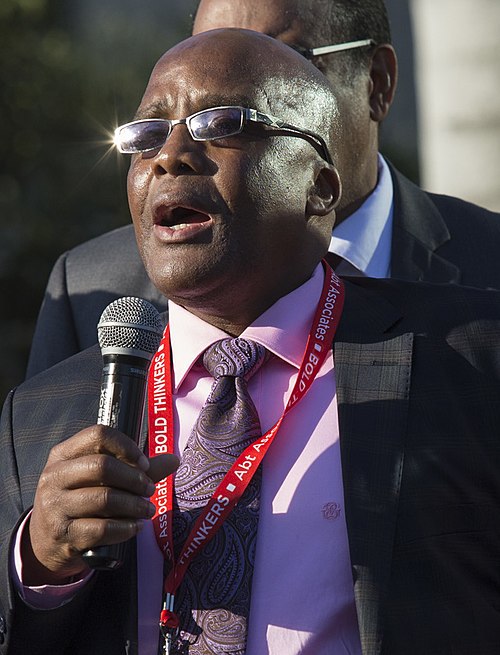
Aaron Motsoaledi
LP; Minister of Home Affairs
Abane Ramdane†
FLN Leader & Strategist
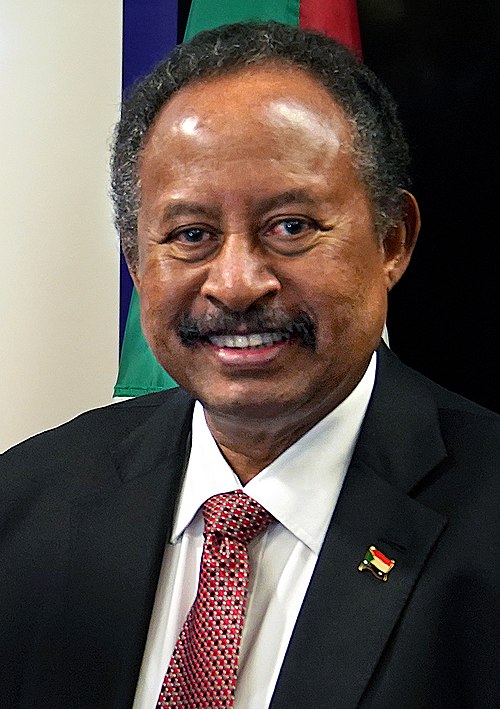
Abdalla Hamdok
Ex-Prime Minister
Abdallah Kigoda
Ex-Minister of Natural Resources