Financial Breakdown
Asset Distribution
Assets vs Liabilities
Assets
Liabilities
Disclaimer: These financial estimates are based on publicly available information and should be considered approximate. Last updated: 12/29/2025
Biography
Introduction: The Father of African Liberation
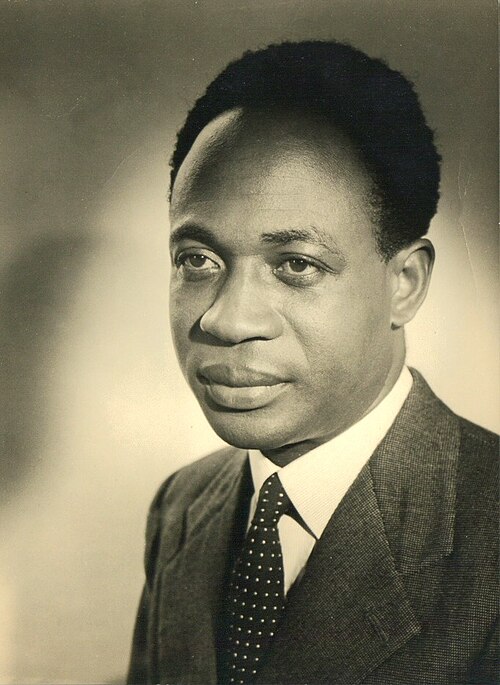
Dr. Kwame Nkrumah† stands as one of the most pivotal figures in 20th-century African history. As the first Prime Minister and later the first President of Ghana, he led the nation to become the first sub-Saharan African colony to gain independence from European rule on March 6, 1957. This monumental achievement shattered the myth of colonial invincibility and ignited liberation movements across the continent. Kwame Nkrumah† was not merely a national leader; he was a revolutionary Pan-Africanist whose vision extended far beyond Ghana's borders. He passionately advocated for the political and economic unity of Africa, famously declaring, "The independence of Ghana is meaningless unless it is linked up with the total liberation of the African continent." His life's work in Politics & Government during the Liberation Era redefined the destiny of a continent and cemented his legacy as a global icon of freedom and self-determination.
Early Life & Education: The Making of a Revolutionary
Kwame Nkrumah† was born around September 21, 1909, in Nkroful, in the Gold Coast (now Ghana). His early education at Catholic mission schools revealed a sharp intellect, leading him to train as a teacher in Accra. His formative years were marked by exposure to the ideas of black intellectuals like Marcus Garvey, which planted the early seeds of his political consciousness. In 1935, driven by an insatiable thirst for knowledge, Nkrumah left for the United States, where he faced the harsh realities of racial segregation. He earned multiple degrees, including a Bachelor of Arts in Economics and Sociology from Lincoln University and a Master of Science in Education and a Master of Arts in Philosophy from the University of Pennsylvania.
These ten years in America were crucial. He immersed himself in political philosophy, organizing African student groups and absorbing the works of Karl Marx, Vladimir Lenin, and other socialist thinkers. In 1945, he moved to London to study law and immediately plunged into anti-colonial activism. He helped organize the seminal Fifth Pan-African Congress in Manchester alongside giants like George Padmore and W.E.B. Du Bois. This experience solidified his commitment to a liberated and united Africa, transforming him from a scholar into a dedicated revolutionary strategist poised to return home and challenge British rule.
Career & Major Achievements: From Activist to President
Returning to the Gold Coast in 1947, Kwame Nkrumah† quickly assumed leadership of the United Gold Coast Convention (UGCC) as its General Secretary. His mass mobilization tactics, including the founding of the Accra Evening News and the Committee on Youth Organization (CYO), galvanized the populace but alarmed the conservative UGCC leadership. A decisive break led Nkrumah to found the Convention People's Party (CPP) in 1949, with the powerful slogan "Self-Government Now." He launched a campaign of "Positive Action" – non-violent protests, strikes, and non-cooperation – which resulted in his imprisonment by the colonial authorities in 1950. Yet, from his cell, he led the CPP to a landslide victory in the 1951 elections, forcing the British to release him to form a government.
The Path to Independence and Presidential Leadership
As Leader of Government Business, Nkrumah worked tirelessly toward full sovereignty. On March 6, 1957, his efforts culminated in the birth of the independent nation of Ghana. As Prime Minister, he embarked on an ambitious modernization program. In 1960, Ghana became a republic, and Kwame Nkrumah† was elected its first President. His domestic policies focused on rapid industrialization and massive investment in education and infrastructure, symbolized by the construction of the Akosombo Dam, which provided hydroelectric power for the nation. He established the Kwame Nkrumah University of Science and Technology (KNUST) to foster technical skills vital for development.
Pan-Africanism on the World Stage
Nkrumah's international policy was unequivocally Pan-African. He used Ghana's independence as a platform to support liberation movements across Africa, providing funds, training, and a voice. He was instrumental in founding the Organization of African Unity (OAU) in 1963, a cornerstone of continental diplomacy. He also championed the Non-Aligned Movement, positioning Ghana and Africa as a significant force in global Politics & Government, independent of Cold War blocs. His visionary books, such as Africa Must Unite and Neo-Colonialism: The Last Stage of Imperialism, outlined his philosophy and warned of new forms of economic domination.
Personal Life, Overthrow, and Enduring Legacy
While intensely dedicated to his political mission, Kwame Nkrumah† was a private individual. He married an Egyptian Coptic librarian, Fathia Rizk, in 1957, and they had three children. His life was one of austere dedication; he had little interest in personal wealth, viewing resources as tools for national development. His later years in power were marred by increasing authoritarianism, a deteriorating economy, and the passage of laws that suppressed opposition. This, combined with external pressures, led to his overthrow in a military coup on February 24, 1966, while he was on a state visit to China and North Vietnam. He spent his final years in exile in Guinea, where President Sékou Touré made him honorary co-president. He died of cancer in Bucharest, Romania, on April 27, 1972.
The legacy of Kwame Nkrumah† is profound and complex. He is revered as Osagyefo (The Redeemer) in Ghana and across Africa for his pioneering role in ending colonial rule. His face adorns Ghana's currency, and his mausoleum in Accra is a national monument. His Pan-African dream, though unrealized in his lifetime, inspired the creation of the African Union and continues to fuel debates about continental unity. Criticisms of his governing style are part of a balanced historical assessment, yet they do not diminish his monumental achievement in placing Africa on the path to political self-determination. He remains the seminal intellectual and practical force behind the modern African liberation project.
Net Worth & Philosophical Stance on Wealth
Unlike many leaders, Kwame Nkrumah† was not a man driven by personal financial accumulation. His focus was squarely on the economic independence and wealth of the nation-state, not individual fortune. As a socialist and anti-imperialist, he viewed the pursuit of personal wealth as contradictory to the collective struggle against poverty and neo-colonialism. There are no credible records or estimates of a significant personal net worth for Nkrumah. His "business ventures" were state-led initiatives like the Ghana State Housing Corporation and the Ghana Industrial Holding Corporation (GIHOC), designed to foster public ownership and economic sovereignty. Any funds at his disposal were directed toward national projects, support for liberation movements, and the operational costs of his Pan-African agenda. His life exemplified a philosophy where value was measured in political freedom and continental unity, not in personal bank accounts. After his overthrow, accusations of personal corruption were largely politically motivated and remain unsubstantiated by historical evidence, with most scholars affirming that his legacy is one of ideological, not financial, capital.
Key Facts and Dates
- Born: September 21, 1909, Nkroful, Gold Coast.
- Higher Education: Lincoln University, University of Pennsylvania (USA).
- Founded CPP: June 12, 1949.
- "Positive Action" Launch: January 8, 1950.
- Ghanaian Independence: March 6, 1957 (First Sub-Saharan colony to gain independence).
- First President of Ghana: July 1, 1960.
- Key Publication: Neo-Colonialism: The Last Stage of Imperialism (1965).
- Overthrown: February 24, 1966.
- Died: April 27, 1972, in Bucharest, Romania.
- Resting Place: Kwame Nkrumah Mausoleum, Accra, Ghana.
For further reading on his life and works, consult resources from the Encyclopædia Britannica or the U.S. National Archives for historical documents related to African affairs during his era.
Net Worth Analysis
Kwame Nkrumah died in 1972 and was a political leader, not a business figure, so he did not accumulate personal wealth comparable to modern billionaires.
Quick Stats
Related People
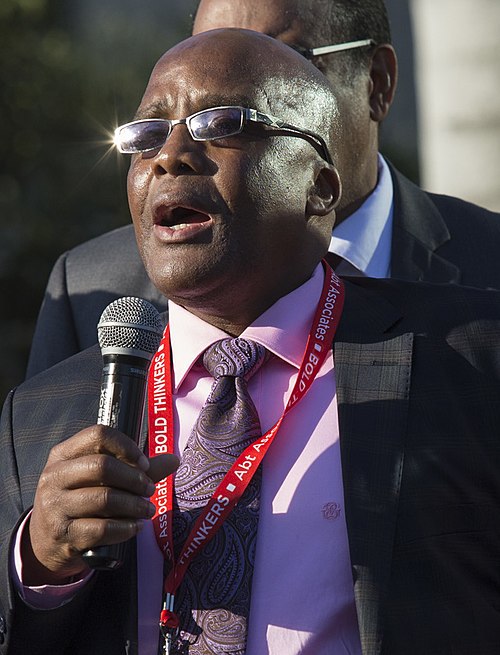
Aaron Motsoaledi
LP; Minister of Home Affairs
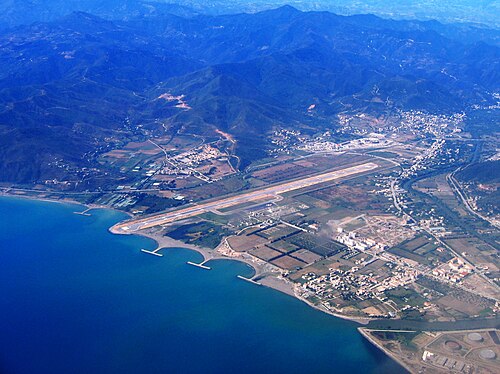
Abane Ramdane†
FLN Leader & Strategist
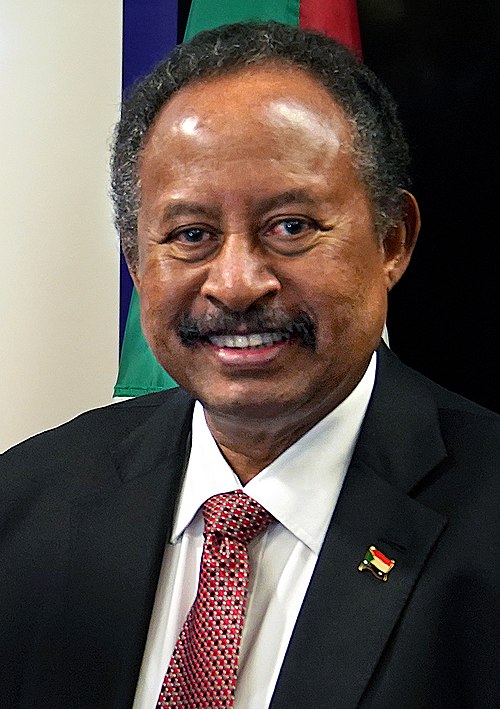
Abdalla Hamdok
Ex-Prime Minister
Abdallah Kigoda
Ex-Minister of Natural Resources