Financial Breakdown
Asset Distribution
Assets vs Liabilities
Assets
Disclaimer: These financial estimates are based on publicly available information and should be considered approximate. Last updated: 12/29/2025
Biography
Introduction: The Lion of Bissau
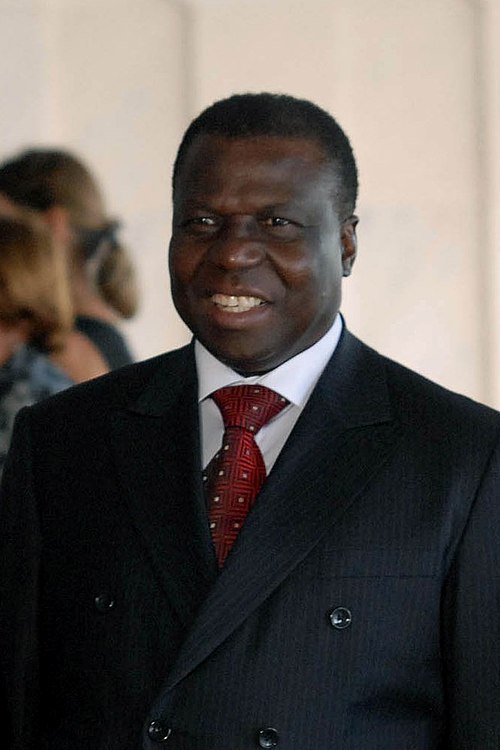
João Bernardo "Nino" Vieira† stands as one of the most pivotal and controversial figures in the modern history of Guinea-Bissau. A key military leader in the nation's bloody struggle for independence from Portugal, he later ascended to the pinnacle of power, serving as President for nearly two decades across two tumultuous periods: from 1980 to 1999, and again from 2005 to 2009. His life and career were inextricably linked with the fortunes of his small West African nation, embodying both its revolutionary hopes and its post-colonial struggles with instability. A master political survivor, João Bernardo Vieira† navigated Cold War politics, implemented economic reforms, and ultimately met a violent end that underscored the turbulent nature of Guinea-Bissau's Politics & Government. His tenure is marked by significant achievements in foreign policy and nation-building, yet also by allegations of authoritarianism, civil war, and involvement in the country's notorious drug trafficking networks.
Early Life & Education: From Bissau to the Bush
João Bernardo Vieira was born on April 27, 1939, in Bissau, then the capital of Portuguese Guinea. Unlike many educated elites who led other independence movements, Vieira's formal education was limited. He attended primary school in Bissau and later studied electricity at a technical school, becoming an electrician by trade. This modest background shaped his pragmatic, hands-on approach to problem-solving. His formative political experiences began not in lecture halls, but in the streets and communities of his homeland, where resentment against Portuguese colonial rule was intensifying.
The pivotal moment in Vieira's early life came in 1960 when he joined the African Party for the Independence of Guinea and Cape Verde (PAIGC), founded by the revolutionary intellectuals Amílcar Cabral and his brother Luís. The PAIGC's Marxist-inspired ideology and commitment to armed struggle provided the perfect vehicle for Vieira's ambition and patriotism. He quickly rose through the ranks, not as a theoretician, but as a capable and ruthless military commander. His leadership in the guerrilla war against Portuguese forces (1963-1974) earned him the nom de guerre "Nino" and a reputation for bravery and tactical cunning. This period was his true education, forging his worldview and his close, though later fractious, relationships with other PAIGC stalwarts who would dominate the nation's Executive Presidency for decades.
Career & Major Achievements: The Path to Power and Turmoil
Following Guinea-Bissau's unilateral declaration of independence in 1973 and its formal recognition in 1974 after Portugal's Carnation Revolution, João Bernardo Vieira† held several high-ranking positions. He served as a member of the PAIGC Political Bureau, President of the National People's Assembly, and Prime Minister under President Luís Cabral. However, tensions within the party, particularly between Cape Verdean and Bissau-Guinean factions, came to a head.
The 1980 Coup and First Presidency (1980-1999)
On November 14, 1980, Vieira led a bloodless coup that ousted President Luís Cabral, accusing him of corruption and Cape Verdean domination. This event marked a critical juncture, severing the union with Cape Verde and installing Vieira as the head of state. His early presidency was characterized by:
- Alignment with the Eastern Bloc: Maintaining the PAIGC's socialist orientation with close ties to the Soviet Union, Cuba, and Libya.
- Centralized Control: Consolidating power through a one-party state, suppressing political dissent.
- Economic Liberalization: In the late 1980s, under pressure from the IMF and World Bank, he reluctantly implemented structural adjustment programs, moving away from a command economy.
Return, Second Presidency, and Assassination (2005-2009)
In a dramatic return, João Bernardo Vieira† came back to Guinea-Bissau in 2005 and won the presidential election, presenting himself as a stabilizing force. His second term, however, was plagued by profound challenges:
- Deeply fractured civil-military relations and repeated coup attempts.
- The growing influence of international drug cartels using Guinea-Bissau as a narco-state transit point.
- A paralyzed political system unable to address chronic poverty.
Personal Life & Legacy: The Enduring "Nino"
Known for his charisma and stubborn will, Vieira was a complex personality. He was married to his wife, Isabel, and was a father. His personal interests were often overshadowed by his political survival, though he was known to enjoy the cultural life of Bissau. His legacy is profoundly dualistic. On one hand, he is remembered as a hero of independence, a strongman who provided periods of relative stability, and a respected elder statesman in West African diplomacy. On the other hand, his legacy is marred by his role in initiating the 1998 civil war, allegations of human rights abuses, corruption, and his inability to curb the drug trade that corrupted state institutions.
Today, João Bernardo Vieira† remains a symbolic figure in the nation's consciousness. His life story—from electrician to guerrilla commander to Ex-President (1980-1999, 2005-2009) to assassination victim—mirrors the traumatic journey of Guinea-Bissau itself: a struggle for sovereignty followed by cycles of violence, coups, and political fragmentation. He is both a founding father and a cautionary tale of the perils of power in a fragile state.
Net Worth & Business Ventures
Accurately quantifying the net worth of João Bernardo Vieira† is challenging, as is the case with many leaders of nations with opaque economies and widespread informal networks. During his long tenure in power, he was widely accused by international observers and political opponents of accumulating significant personal wealth through corrupt practices, including embezzlement of state funds and involvement in illicit trade. Guinea-Bissau's emergence as a major transit point for South American cocaine during his second presidency (2005-2009) led to further allegations, though never conclusively proven in court, that he and members of his inner circle benefited from the narcotics trade. Unlike some African leaders, he was not known for grand, visible business empires or extensive real estate holdings abroad. His financial legacy is thus shrouded in the mystery that characterizes much of Guinea-Bissau's political economy, with his true net worth remaining a subject of speculation rather than documented fact. His primary source of influence was always political and military power, rather than overt commercial enterprise.
Sources: Historical accounts of this period are drawn from reputable news archives (BBC, Reuters, AFP), reports from international bodies like the United Nations and IMF, and academic analyses of West African politics. Key references include the UN Security Council reports on Guinea-Bissau (2000s) and biographies of PAIGC leadership.
Net Worth Analysis
João Bernardo Vieira died in 2009 and was a military-political leader, not a business figure; there are no credible reports of significant personal wealth accumulation.
Quick Stats
Related People
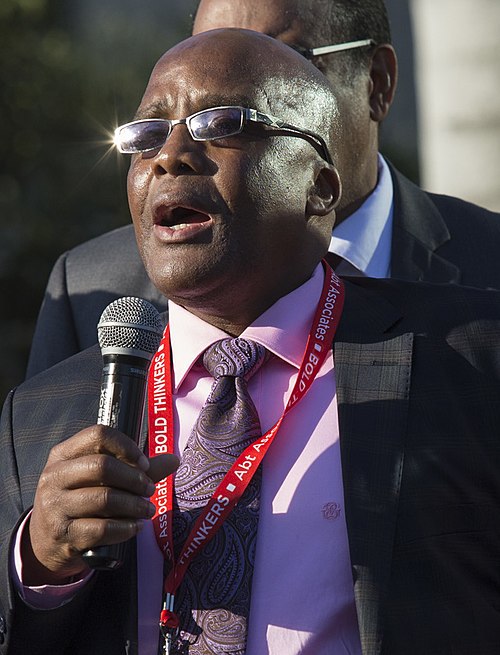
Aaron Motsoaledi
LP; Minister of Home Affairs
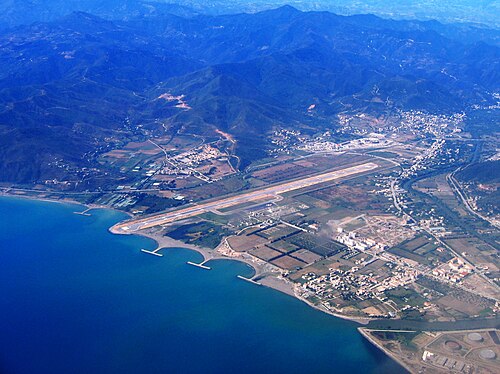
Abane Ramdane†
FLN Leader & Strategist
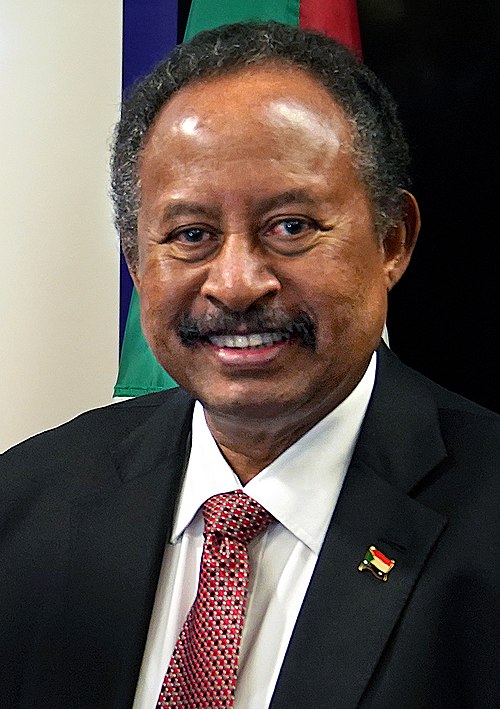
Abdalla Hamdok
Ex-Prime Minister
Abdallah Kigoda
Ex-Minister of Natural Resources