Biography
Introduction: The Unlikely Revolutionary
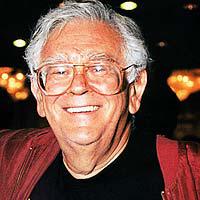
Joe Slovo† stands as one of the most pivotal and complex figures in the history of the South African liberation struggle. A Lithuanian-born Jewish immigrant, he became a central strategist in the fight against apartheid, a key leader of the South African Communist Party (SACP), and a commander in uMkhonto we Sizwe (MK), the armed wing of the African National Congress (ANC). His life defied easy categorization: a committed Marxist who helped negotiate a peaceful transition to democracy, and a white man who rose to the highest echelons of a movement for Black majority rule. His most visible public achievement was overseeing the ambitious Reconstruction and Development Programme (RDP) as South Africa's first Minister of Housing in Nelson Mandela's 1994 Government of National Unity. The legacy of Joe Slovo† is etched into the political and physical landscape of modern South Africa, a testament to his unwavering commitment to non-racialism and equality.
Early Life & Education: From Obeliai to Johannesburg
Joe Slovo was born Yossel Mashel Slovo on May 23, 1926, in Obeliai, Lithuania. His family emigrated to South Africa in 1934 to escape rising anti-Semitism and poverty, settling in Johannesburg. The experience of being part of a persecuted minority profoundly shaped his worldview. He left school at a young age, taking jobs as a clerk and a shop assistant, which exposed him to the harsh economic and racial inequalities of South African society. Despite his limited formal education, he was intellectually voracious, reading widely and developing a keen interest in politics.
His formative political experiences came during World War II. He volunteered for service with the South African forces, fighting against the Nazi ideology that mirrored the racism he saw at home. Upon his return in 1945, he joined the Springbok Legion, a progressive ex-servicemen's organization, and the Communist Party of South Africa (later the SACP). It was during this period that he met and married Ruth First, another formidable intellectual and anti-apartheid activist. Slovo pursued legal studies through correspondence, qualifying as an attorney in 1951. He and First used their legal skills to defend those targeted by the apartheid regime's repressive laws, establishing Slovo as a "struggle lawyer" deeply embedded in the heart of the resistance.
Career & Major Achievements: Strategist, Soldier, Negotiator
The career of Joe Slovo† is a chronicle of the anti-apartheid movement's evolution from protest to armed struggle to negotiation. After the ANC and SACP were banned in 1960, he went into exile in 1963. He quickly rose through the ranks of the liberation movement, becoming a key member of the SACP's Central Committee and later its General Secretary in 1984. Within uMkhonto we Sizwe, he served as Chief of Staff, applying his strategic mind to the military challenge against the apartheid state. His 1976 essay, "No Middle Road," was a seminal text, arguing that apartheid had entered a period of irreversible crisis.
Architect of the "People's War" and Strategic Thinker
Slovo was a principal architect of the concept of a "People's War," a strategy aimed at making the country ungovernable through a combination of mass mobilization and selective armed actions. His analytical prowess made him one of the movement's foremost theoreticians. Despite his high profile as a "communist bogeyman" for the apartheid regime, he also displayed remarkable pragmatism. In the late 1980s, he was instrumental in secret talks that paved the way for formal negotiations, understanding that a military victory was unlikely and a political settlement was necessary.
Negotiating Democracy and Leading Reconstruction
With the unbanning of the ANC and SACP in 1990, Joe Slovo† returned to South Africa and played a crucial role in the Convention for a Democratic South Africa (CODESA) negotiations. To break a deadlock over the issue of minority veto power, he proposed the groundbreaking "sunset clause," which guaranteed civil service jobs for white officials and a government of national unity for five years. This bold concession was vital in securing a peaceful transition. In 1994, President Nelson Mandela appointed him as the Minister of Housing in the first democratic cabinet. In this role, Slovo tackled the massive housing backlog with characteristic energy, championing the RDP's goal of building one million houses. Though his tenure was cut short by illness, he set the foundation for one of the new government's most critical delivery programmes.
Personal Life & Legacy: The Personal Cost of Struggle
The personal life of Joe Slovo was marked by both deep love and profound tragedy, mirroring the sacrifices of the struggle. His marriage to Ruth First was an iconic partnership of the liberation movement. In 1982, Ruth First was assassinated by a letter bomb sent by apartheid security forces in Maputo, Mozambique—a devastating blow to Slovo and their three daughters, Shawn, Gillian, and Robyn. Slovo later married Helena Dolny, a fellow activist and academic. Known for his sharp wit, love of cigars, and unpretentious nature, he was a charismatic figure who could connect with people from all walks of life.
The legacy of Joe Slovo† is multifaceted. He is remembered as a hero of the liberation struggle, a symbol of non-racialism, and a pragmatic leader whose strategic flexibility helped deliver a democracy. The largest informal settlement in Cape Town, Joe Slovo Park, is named in his honor, a poignant and complex tribute given the ongoing challenges of housing and inequality. His ideas on a "socialist future" and his analysis of power continue to be debated within the South African left. His life story remains a powerful narrative of an immigrant who chose to fight for the freedom of his adopted country's oppressed majority.
Net Worth & Business Ventures: The Life of a Revolutionary
Discussing Joe Slovo† in terms of net worth and business ventures is antithetical to the life he led. He was a lifelong revolutionary and committed communist who dedicated his entire life and professional skills to the struggle against apartheid, not to personal wealth accumulation. As a "struggle lawyer," he often worked for little or no fee for his persecuted clients. During his long years in exile, he lived on a modest stipend from the movement. His appointment as a government minister in 1994 came at the end of his life, and his focus was entirely on public service, not financial gain. Any assessment of Joe Slovo's "value" lies not in monetary terms but in his immense political and intellectual contribution to the creation of a democratic South Africa. His estate, like his life, was unassuming, leaving behind a legacy of published works, personal writings, and a name that remains deeply respected and sometimes contested in the nation's history.
Sources & Further Reading: The life and work of Joe Slovo are documented in his own writings, such as "The South African Working Class and the National Democratic Revolution," and in biographies like "Slovo: The Unfinished Autobiography" and "Joe Slovo in the Struggle for South Africa." The South African History Online archive provides a comprehensive timeline and resources. His role is also detailed in the records of the African National Congress and the South African Communist Party.
Net Worth Analysis
Joe Slovo was a prominent anti-apartheid activist and government minister who dedicated his life to public service, not private wealth accumulation. He died in 1995 and was not a billionaire.
Quick Stats
Related People
Aaron Motsoaledi
LP; Minister of Home Affairs
Abane Ramdane†
FLN Leader & Strategist
Abdalla Hamdok
Ex-Prime Minister
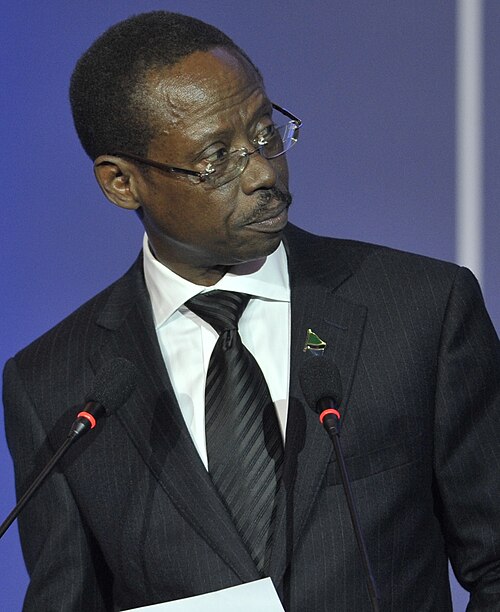
Abdallah Kigoda
Ex-Minister of Natural Resources