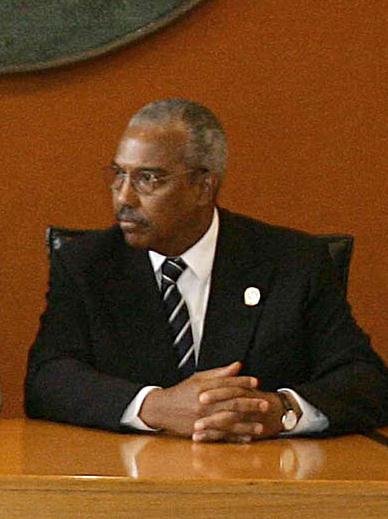
$500K
Estimated Net Worth
As of 2024 • medium confidence
Biography
Introduction: A Pillar of Stability in Turbulent Times
In the tumultuous landscape of West African Politics & Government, few figures have embodied the role of a neutral stabilizer as profoundly as Henrique Rosa†. Born in 1946, Rosa emerged as a pivotal figure in the history of Guinea-Bissau, a nation perennially challenged by political instability and military coups. His claim to historical significance rests not on a lengthy, power-seeking political career, but on a critical, self-limited tenure as Ex-Interim President. Following a bloody civil war and a military coup in 2003, Henrique Rosa† was chosen not for partisan allegiance, but for his perceived integrity and managerial competence. From September 2003 to October 2005, he presided over a fragile period of national healing, successfully steering the country toward free and fair democratic elections. His leadership is a seminal case study in effective Transitional Leadership, where the primary achievement is the peaceful transfer of power back to a legitimate civilian government.
Early Life & Education: Forging a Foundation in Commerce and Community
Henrique Rosa† was born in 1946 in Bafatá, a city in east-central Guinea-Bissau, then a Portuguese colony known as Portuguese Guinea. Unlike many of his contemporaries who rose through military or militant political ranks, Rosa's early path was oriented toward commerce and civil society. Details of his formal education are less documented than his political actions, but it is known that he pursued studies in economics and business administration. This academic focus on practical management and finance, rather than ideology, would later define his approach to governance.
His formative years were spent during the protracted and brutal Guinea-Bissau War of Independence (1963-1974), led by the African Party for the Independence of Guinea and Cape Verde (PAIGC). While not a frontline combatant, the experience of living through a liberation struggle deeply informed his understanding of national fragility and the cost of conflict. After independence in 1974, Rosa built a career in the private sector, establishing himself as a successful businessman. He founded and managed the Banco da África Ocidental (BAO) in Bissau, gaining a reputation for pragmatism, financial acumen, and a commitment to development outside the volatile sphere of partisan politics. This background made him a respected figure among both domestic economic actors and international partners, who saw him as a credible and non-threatening administrator.
Career & Major Achievements: The Interim Presidency and Beyond
The apex of Henrique Rosa's† public life was thrust upon him by crisis. In September 2003, General Veríssimo Correia Seabra led a military coup that ousted President Kumba Ialá. The country, still recovering from a 1998-99 civil war, was in disarray, its institutions shattered and its economy in ruins. The military junta, under international pressure, needed a civilian president to lead a transition. They turned to Henrique Rosa†, the businessman with no direct political baggage, to serve as Interim President.
The Transitional Mandate (2003-2005)
Rosa's presidency was defined by a clear, singular objective: to restore constitutional order and organize credible elections. He formed a broad-based, inclusive government of national unity, bringing together technocrats and representatives from various political factions. His key achievements during this 25-month period were monumental:
- Economic Stabilization: Leveraging his financial expertise, he worked with international institutions like the IMF and World Bank to secure crucial aid and begin stabilizing the nation's bankrupt economy.
- Preparation for Elections: His administration successfully organized presidential elections in 2005, which were widely praised by international observers as free and fair. This process culminated in the peaceful election of João Bernardo "Nino" Vieira.
- National Reconciliation: He fostered a climate of dialogue and calm, providing a necessary "cooling-off" period that allowed bitter political rivals to participate in an electoral process rather than return to conflict.
On October 1, 2005, Henrique Rosa† fulfilled his mandate, handing power to the elected President Vieira. This act cemented his legacy as a true transitional figure who sought the office not for power, but to return it to the people.
Later Political Engagement
After his interim service, Rosa remained a respected elder statesman. In the 2009 presidential election, following the assassination of President Vieira, he ran as an independent candidate, finishing third with a significant share of the vote. This demonstrated his continued popularity and the public's trust in his integrity. He later served as an advisor and mediator in subsequent political crises, always advocating for constitutional solutions and dialogue. His career stands as a testament to the vital role that non-partisan, administrative competence can play in rescuing a state from collapse.
Personal Life, Legacy, and Lasting Impact
Outside the political arena, Henrique Rosa† was known as a private family man and a devout Catholic. His faith and personal ethics were frequently cited as the bedrock of his commitment to peace and service. He was not a charismatic populist but was perceived as a humble and serious leader focused on tangible results. His interests remained tied to economic development, and he was a strong advocate for the role of the private sector in building a prosperous Guinea-Bissau.
The legacy of Henrique Rosa† is profound. In a region where transitional leaders sometimes cling to power, he set a powerful example of self-limitation and constitutional fidelity. He is remembered as the "gentleman president" who placed national interest above all else. Scholars of Transitional Leadership and post-conflict reconstruction often point to his tenure as a model of successful, short-term stewardship aimed solely at legitimizing democratic processes. His death in 2013 was mourned nationally and internationally, with tributes highlighting his crucial role in preventing Guinea-Bissau from becoming a failed state in the early 2000s. His life underscores the idea that in moments of profound crisis, leadership based on managerial skill, neutrality, and a clear exit strategy can be more valuable than one driven by ideology or ambition.
Net Worth & Business Ventures: The Foundation of His Credibility
While specific figures regarding the net worth of Henrique Rosa† are not publicly documented, the foundation of his credibility as a transitional leader was directly tied to his pre-political career as a successful businessman and banker. His primary venture was the establishment and management of the Banco da África Ocidental (BAO) in Bissau. This experience provided him with a deep understanding of fiscal management, economic policy, and the practical challenges of operating in Guinea-Bissau's fragile economy. His financial acumen was not a sidebar to his story; it was central to his selection as Interim President. The military junta and international community believed he could be trusted to manage state finances responsibly and negotiate effectively with global financial institutions. His wealth, derived from the private sector, also positioned him as relatively independent from the corrupting influences of long-entrenched political networks, allowing him to approach the interim role with a focus on national rather than personal or factional gain. Thus, his business success was less about personal fortune and more about the foundational expertise it provided for his historic political role.
Note: This biography is compiled from historical records and reputable news archives covering Guinean politics. Key sources for the life and presidency of Henrique Rosa† include reports from the BBC, Reuters, Africanews, and academic analyses of Guinea-Bissau's political transitions.
Net Worth Analysis
Henrique Rosa was a political figure and interim president of Guinea-Bissau, not a business magnate; his wealth was modest and derived from his public service role in one of the world's poorest countries.
Quick Stats
Related People
Aaron Motsoaledi
LP; Minister of Home Affairs
Abane Ramdane†
FLN Leader & Strategist
Abdalla Hamdok
Ex-Prime Minister
Abdallah Kigoda
Ex-Minister of Natural Resources