$1M
Estimated Net Worth
As of 2024 • medium confidence
Financial Breakdown
Asset Distribution
Assets vs Liabilities
Assets
Disclaimer: These financial estimates are based on publicly available information and should be considered approximate. Last updated: 12/31/2025
Biography
Introduction: A Defining Voice in Contemporary Literature
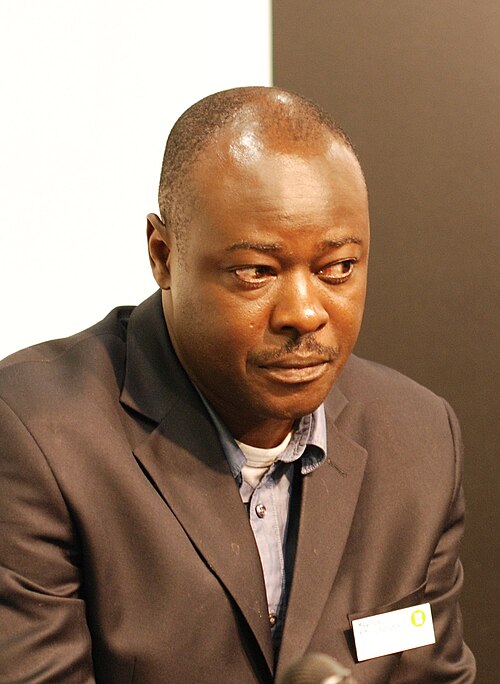
Helon Habila stands as one of the most significant and celebrated authors to emerge from Nigeria in the 21st century. A masterful novelist, poet, and academic, Habila has carved a unique space in the global Arts & Culture landscape by weaving intricate narratives that explore the complex realities of postcolonial Africa, political turmoil, and the human condition. His prominence was catapulted onto the international stage in 2001 when he won the prestigious Caine Prize for African Writing for his short story "Love Poems." This early accolade marked him as a leading figure among a new generation of African writers. Beyond the Caine Prize, Helon Habila's career is distinguished by critically acclaimed novels, influential editorial work, and a commitment to mentoring emerging voices, solidifying his reputation as a pivotal Caine Prize Winner & Novelist whose work offers profound insight into modern Nigeria and the African diaspora.
Early Life & Education: Formative Years in Northern Nigeria
Helon Habila was born in 1967 in Kaltungo, a town in present-day Gombe State, in the northeastern part of Nigeria. Growing up in this region, he was immersed in a diverse cultural and linguistic environment, which would later inform the rich tapestry of his fictional worlds. His early education was rooted in Nigeria, where he developed a deep love for storytelling and literature. For his tertiary education, Habila attended the University of Jos, Plateau State, where he studied English Language and Literature. This academic foundation provided him with the critical tools to analyze and eventually create literature that engaged with both local and global traditions.
A pivotal formative experience was his move to Lagos after graduation. He worked first as a teacher and then, crucially, as a journalist for Hints Magazine and later as the literary editor for Vanguard Newspaper. This period was instrumental. Journalism honed his observational skills, attuned him to the political and social currents of Nigerian society in the turbulent 1990s—a decade marked by military dictatorship and social unrest—and provided the raw material for his early fiction. It was during these years that Helon Habila began writing the poems and short stories that would culminate in his first published collection and his historic Caine Prize win.
Career & Major Achievements: From Prize-Winning Stories to Acclaimed Novels
The career of Helon Habila is a testament to consistent evolution and deepening literary ambition. His breakthrough came with the publication of his first book, Prison Stories (2001), a collection that included the Caine Prize-winning "Love Poems." The story's poignant exploration of life under a repressive regime resonated powerfully with judges and readers alike, announcing the arrival of a major new talent.
The Novelist Emerges
Building on this success, Habila published his first novel, Waiting for an Angel, in 2002. The novel, which expanded on the themes and characters from his short stories, is a fragmented, powerful narrative set in Lagos under military rule. It won the Commonwealth Writers' Prize for Best First Book (Africa Region) in 2003, confirming his status as a novelist of substance. His second novel, Measuring Time (2007), shifted focus to a rural setting, tracing the lives of twin brothers in a small Nigerian village against a backdrop of the country's political history. It was praised for its epic scope and intimate character portraits.
With Oil on Water (2010), Helon Habila tackled one of the most pressing issues in the Niger Delta: environmental degradation and the violence surrounding the oil industry. Told through the journey of two journalists, the novel is a haunting, atmospheric thriller that earned international acclaim for its lyrical prose and moral complexity. His fourth novel, The Chibok Girls (2016), is a powerful work of reportage blended with personal reflection, focusing on the infamous abduction of schoolgirls by Boko Haram. His most recent novel, Travelers (2019), examines the African migrant experience in Europe, showcasing his continued engagement with urgent transnational themes.
Academic and Editorial Influence
Beyond his own writing, Helon Habila has significantly impacted the literary world through academia and editing. He has held prestigious fellowships and teaching positions at universities including the University of East Anglia, George Mason University, and the University of Nebraska-Lincoln. As an editor, he curated the influential British Granta Magazine's "The Magazine of New Writing" issue on Africa. He also edited The Granta Book of the African Short Story (2011), playing a key role in shaping the canon and introducing readers to a wide array of African literary voices.
Personal Life, Legacy & Impact on Arts & Culture
Helon Habila is known to maintain a relatively private personal life, focusing his public energy on his literary and academic pursuits. He is married and has children. His interests, as reflected in his work and interviews, are deeply intellectual, spanning history, politics, and music. While not a public philanthropist in the traditional sense, his legacy is one of intellectual and creative philanthropy. Through his teaching, editing, and mentorship, he has directly nurtured and promoted the careers of countless younger writers across Africa and the diaspora.
The lasting impact of Helon Habila on Arts & Culture, particularly literature, is multifaceted. He is a bridge between the foundational generation of Nigerian writers like Chinua Achebe and Wole Soyinka and the vibrant, digitally-connected writers of today. His work demonstrates that African literature can be simultaneously locally grounded and globally relevant, tackling specific Nigerian histories while speaking to universal themes of freedom, love, and injustice. As a Caine Prize Winner & Novelist, he helped pave the way for the international recognition of African short stories and novels, proving that literary prizes can be transformative springboards. His body of work ensures he will be remembered as a crucial chronicler of Nigeria's social and political journey and a sophisticated artist of the highest order.
Net Worth & Literary Career
While the exact net worth of Helon Habila is not publicly disclosed, as is typical for most literary figures, his financial success is derived from a multifaceted career built over two decades. His income streams include:
- Book Royalties: Earnings from his five critically acclaimed novels and other published works, which have been translated into multiple languages and published worldwide.
- Academic Appointments: Salaries from his positions as a professor of creative writing at reputable universities in the United States and the United Kingdom.
- Literary Prizes & Fellowships: Monetary awards from winning the Caine Prize (USD $10,000), the Commonwealth Writers' Prize, and other grants and fellowships that support his writing and research.
- Speaking Engagements & Editorial Work: Honorariums from international literary festivals, lectures, and fees for editorial projects like the Granta anthology.
Helon Habila's "business" is his literary and intellectual enterprise. He has not ventured into commercial business outside of the publishing and academic worlds. His success is a model of a sustainable career in the Arts & Culture sector, built on consistent artistic excellence, critical recognition, and a dedication to the craft of writing and teaching.
Net Worth Analysis
Helon Habila is a celebrated novelist and academic, not a business figure; his wealth stems from literary prizes, book sales, and academic positions, placing him in the millionaire range.
Quick Stats
Related People
Abasse Ndione
Novelist & Playwright
Abdel Rahman al-Abnudi†
Poet (Egypt-Sudan)
Abdelkrim Ghallab†
Novelist & Journalist
Abdellah Taïa
Novelist & Filmmaker