$1M
Estimated Net Worth
As of 2024 • medium confidence
Financial Breakdown
Asset Distribution
Assets vs Liabilities
Assets
Disclaimer: These financial estimates are based on publicly available information and should be considered approximate. Last updated: 12/31/2025
Biography
Introduction: A Pioneer of African Cinema
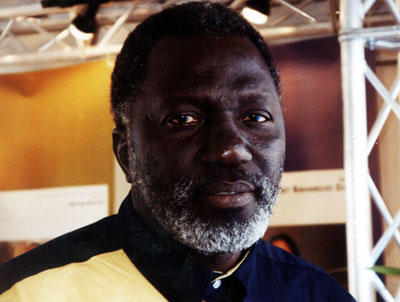
Flora Gomes is a name synonymous with the birth and evolution of cinematic storytelling in Guinea-Bissau. Born in 1949 in the village of Cadique, Gomes emerged not just as his nation's first and most prominent film director, but as a vital chronicler of its complex history and resilient spirit. His work occupies a crucial space in the landscape of Arts & Culture, offering a post-colonial perspective rarely seen on the global screen. Gomes's international breakthrough came with his 1994 masterpiece, Po Di Sangui (The Tree of Blood), which was selected for the prestigious Cannes Film Festival, marking a historic moment for Guinea-Bissau and Lusophone African cinema. Through poetic realism and magical allegory, Flora Gomes has dedicated his career to exploring themes of liberation, memory, love, and the enduring hope of his people, securing his legacy as a foundational figure in world cinema.
Early Life & Education: Forging a Path in a Nation Forging Itself
Flora Gomes was born in 1949, a time when Guinea-Bissau was still under Portuguese colonial rule. His formative years were thus shaped by the atmosphere of the struggle for independence, led by the African Party for the Independence of Guinea and Cape Verde (PAIGC). This revolutionary context would become the bedrock of his artistic vision. Unlike many filmmakers who find their calling in established institutions, Gomes's path was carved out of necessity and opportunity in a nation on the cusp of creation.
His foray into film began not in a classroom, but in the field. In the early 1970s, he worked as an assistant to the Cuban filmmaker Santiago Álvarez, who was in Guinea-Bissau documenting the independence war. This practical, guerrilla-style filmmaking education was pivotal. Following independence in 1973-74, the new government, recognizing the power of cinema as a tool for cultural construction, sent Gomes to study abroad. He attended the Instituto Cubano del Arte e Industria Cinematográficos (ICAIC) in Cuba, a hotspot for politically engaged filmmakers. He furthered his studies at the prestigious Lisbon Film School in Portugal. This unique educational blend—hands-on revolutionary documentation, Cuban cinematic activism, and European technical training—equipped Flora Gomes with a distinct and powerful voice to tell the stories of a newly sovereign nation.
Career & Major Achievements: Chronicling a Nation's Soul
Flora Gomes's career is a mirror to the journey of Guinea-Bissau itself, moving from the documentation of revolutionary triumph to the nuanced exploration of its social and spiritual aftermath. His early work was directly tied to the nation-building project. He collaborated on the seminal documentary O Regresso de Cabral (The Return of Cabral, 1976), about the repatriation of Amílcar Cabral's remains. His debut feature, Mortu Nega (Death Denied, 1988), co-produced with the Guinea-Bissau government, is a landmark film. It was the first feature film ever produced in Guinea-Bissau and one of the first in Africa to directly address the anti-colonial struggle from a woman's perspective, focusing on the sacrifices of civilians during the war.
International Acclaim and Poetic Storytelling
The 1990s saw Flora Gomes transition to more allegorical and poetic narratives, gaining international recognition. Po Di Sangui (1994) premiered in the Un Certain Regard section at Cannes, catapulting him to global attention. The film is a sweeping generational saga that uses magical realism to explore the clash between tradition and modernity, and the environmental degradation of his homeland. This was followed by Nha Fala (My Voice, 2002), a vibrant and colorful musical comedy. In a bold formal choice, the film features characters who express themselves through song, yet its protagonist, Vita, is cursed to never sing. Nha Fala premiered at the Venice Film Festival, showcasing Gomes's versatility and optimistic vision.
Awards and Lasting Impact
Throughout his career, Flora Gomes's films have been celebrated at major festivals worldwide, earning numerous awards and solidifying his reputation. His body of work is characterized by:
- A commitment to African perspectives: Centering Guinean narratives, landscapes, and languages.
- The fusion of realism and magic: Creating a unique cinematic language to address complex social issues.
- Focus on resilience and hope: Even when addressing war or hardship, his films are imbued with a profound sense of human dignity and the possibility of renewal.
As a Film Director from a small West African nation, Gomes's success paved the way for other Lusophone African filmmakers and proved that powerful, artistically significant cinema could emerge from anywhere. He is frequently cited alongside Ousmane Sembène (Senegal) and Souleymane Cissé (Mali) as a pioneer who defined the contours of post-colonial African film.
Personal Life & Legacy: The Man Behind the Camera
While Flora Gomes maintains a relatively private personal life, his public persona is that of a humble, deeply thoughtful artist dedicated to his community. He is known to be deeply rooted in the cultural traditions of Guinea-Bissau, which consistently inform the symbolism and rhythms of his films. His work itself is an act of cultural preservation and philanthropy, creating an enduring record of Bissau-Guinean life, folklore, and challenges for future generations.
The legacy of Flora Gomes is multifaceted. Within Guinea-Bissau, he is a cultural hero who gave the nation its cinematic voice on the world stage. For African cinema, he expanded its thematic and stylistic range, moving beyond the initial wave of militant cinema to embrace allegory, music, and universal stories of love and community. Globally, he remains a crucial reference point for anyone studying world cinema or the Arts & Culture of post-colonial societies. His films are taught in universities worldwide and are essential viewing for understanding the creative spirit of West Africa. Perhaps his greatest legacy is demonstrating that cinema is not just entertainment but a vital tool for memory, critique, and healing—a tree of blood and life whose roots are deeply planted in the soil of Guinea-Bissau.
Net Worth & Business Ventures: The Economics of Art House Cinema
As an acclaimed Film Director working primarily in the realm of African art house cinema, specific details regarding Flora Gomes's net worth are not publicly disclosed, which is common for artists of his profile. His financial model is typical of independent, internationally co-produced auteur cinema. His films are not major commercial blockbusters but are funded through a complex patchwork of European and African production companies, film festival grants, and cultural funds from countries like France, Portugal, and Luxembourg. For instance, Nha Fala was a co-production between Guinea-Bissau, France, and Portugal.
Therefore, Gomes's "business" is his artistry. His primary venture is his production company, which manages the creation and rights to his films. His income is likely derived from director's fees, screenplay rights, and residuals from international film distribution, television broadcasts, and educational sales. While not a multimillionaire by Hollywood standards, Flora Gomes's success is measured in cultural capital and sustainability. His ability to consistently secure international funding over four decades is a testament to the high esteem in which his artistic vision is held, allowing him to maintain a career as a full-time filmmaker—a significant achievement in itself for any director from the Global South.
Sources & Further Reading: Information on Flora Gomes can be found through academic journals on African cinema, profiles from international film festivals like Cannes and Venice, and databases such as IMDb and African Film Festival Inc. archives.
Net Worth Analysis
Flora Gomes is a renowned but not commercially blockbuster film director from a low-GDP country; wealth is derived from artistic career, not business.
Quick Stats
Related People
Abasse Ndione
Novelist & Playwright
Abdel Rahman al-Abnudi†
Poet (Egypt-Sudan)
Abdelkrim Ghallab†
Novelist & Journalist
Abdellah Taïa
Novelist & Filmmaker