$1M
Estimated Net Worth
As of 2024 • high confidence
Financial Breakdown
Asset Distribution
Assets vs Liabilities
Assets
Disclaimer: These financial estimates are based on publicly available information and should be considered approximate. Last updated: 12/30/2025
Biography
Introduction: The First UN Secretary-General from Africa
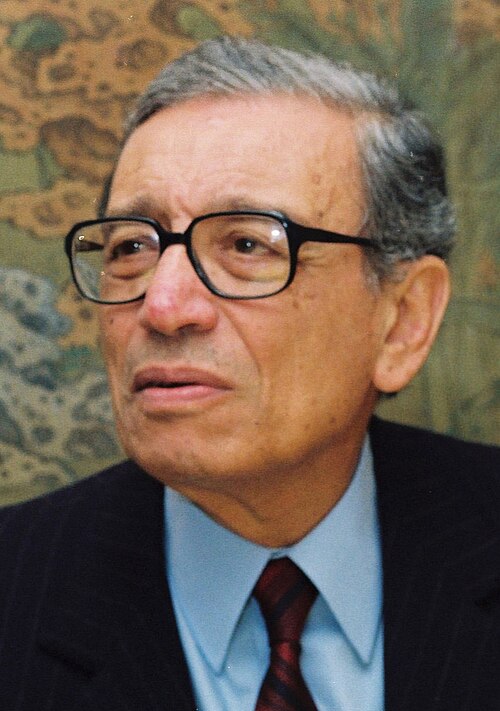
Dr. Boutros Boutros-Ghali† stands as a monumental figure in 20th-century international diplomacy, renowned for his intellect, principled stance, and historic role as the sixth Secretary-General of the United Nations. Born in 1922 in Cairo, Egypt, he carved a path that led him from academia and Egyptian politics to the pinnacle of global leadership. His tenure from 1992 to 1997 was a period of seismic change, marked by the end of the Cold War and rising hopes for a new world order. As the first African and first Arab UN Secretary-General, Dr. Boutros Boutros-Ghali† embodied a shift towards greater inclusivity in global governance. His key achievement, the ambitious "An Agenda for Peace," sought to redefine the UN's approach to conflict prevention, peacemaking, and peacekeeping in a turbulent era. His career remains a critical study in the challenges and complexities of multilateralism.
Early Life & Education: Foundations of a Scholar-Diplomat
Boutros Boutros-Ghali was born on November 14, 1922, into a prominent Coptic Christian family with a rich political heritage. His grandfather, Boutros Ghali, served as Prime Minister of Egypt and was a significant figure in the country's history. This lineage instilled in him a deep understanding of statecraft from an early age. He pursued his higher education at the University of Cairo, graduating with a Bachelor of Laws degree in 1946. His academic prowess then took him to Paris, where he earned a PhD in International Law from the prestigious University of Paris in 1949 and a diploma in international relations from the Institut d'Études Politiques de Paris (Sciences Po).
These formative years in post-war Europe profoundly shaped his worldview. Before entering high-level politics, Dr. Boutros Boutros-Ghali† established himself as a respected scholar and journalist. He served as a professor of international law and international relations at Cairo University for nearly three decades, publishing extensively. He also worked as a journalist for the influential Egyptian newspaper Al-Ahram. This dual foundation in rigorous academia and public communication equipped him with the analytical tools and persuasive skills that would define his diplomatic career, blending intellectual depth with practical political insight.
Career & Major Achievements: From Cairo to the World Stage
Dr. Boutros Boutros-Ghali's† governmental career began in 1977 when Egyptian President Anwar Sadat appointed him Minister of State for Foreign Affairs. In this role, he played a crucial, though initially discreet, part in the peace process with Israel. He was instrumental in the negotiations that led to the 1979 Camp David Accords, a cornerstone of Middle Eastern diplomacy. He held this ministerial position for 14 years, becoming Egypt's longest-serving foreign minister and a seasoned veteran of Arab and African politics.
A Transformative Tenure as UN Secretary-General
On January 1, 1992, Dr. Boutros Boutros-Ghali† began his term as the sixth UN Secretary-General. His election was historic, breaking a long-standing regional precedent. He immediately faced a world grappling with the opportunities and chaos of the post-Cold War era. His most significant contribution was the publication of the landmark report "An Agenda for Peace" in June 1992. This document was a revolutionary blueprint that expanded the concept of UN peacekeeping to include:
- Preventive Diplomacy: Efforts to prevent disputes from escalating.
- Peacemaking: Action to bring hostile parties to agreement.
- Peacekeeping: Deployment of UN forces to maintain ceasefires.
- Post-Conflict Peace-Building: Actions to solidify peace and prevent relapse.
His tenure also saw the launch of major UN conferences on the environment, human rights, women's rights, and social development, placing these issues firmly on the global agenda. However, his term was also marked by profound challenges. The UN's struggles and failures in Somalia, Rwanda, and the Balkans during the mid-1990s led to intense criticism of the organization and of Dr. Boutros Boutros-Ghali's† leadership. His insistence on UN neutrality and his calls for greater financial and military commitment from member states, particularly the United States, created friction. In 1996, the United States vetoed his bid for a second term, making him the only UN Secretary-General to serve a single five-year term.
Post-UN Leadership and Later Work
After leaving the UN, Dr. Boutros Boutros-Ghali† continued to serve the international community. From 1997 to 2002, he served as the first Secretary-General of the Organisation internationale de la Francophonie, promoting French language and cultural cooperation. He also chaired the board of the South Centre, an intergovernmental think-tank for developing countries, and served on the UN's High-Level Panel on Threats, Challenges and Change in 2004.
Personal Life, Legacy, and Lasting Impact
Dr. Boutros Boutros-Ghali† was a man of refined culture, fluent in Arabic, French, and English. He was married to Leia Maria (née Nadler), an Egyptian-born Jewish woman, a union that reflected his personal commitment to bridging divides. An avid writer, he authored numerous books on international law, diplomacy, and his experiences, including his memoir Unvanquished: A U.S.-U.N. Saga. Known for his sharp wit and sometimes acerbic candor, he was a complex figure who commanded both respect and controversy.
The legacy of Dr. Boutros Boutros-Ghali† is multifaceted. He is remembered as a pioneer who broke barriers for the Global South in international institutions. "An Agenda for Peace" remains a foundational and frequently cited document in peace and conflict studies, its frameworks still relevant today. While his tenure is critically examined for the tragedies that unfolded, it also highlighted the structural limitations of the UN when major powers are unwilling to provide consistent support. He passed away on February 16, 2016, in Cairo, leaving behind a contested but undeniably significant imprint on the history of the United Nations and global Politics & Government.
Net Worth and Post-Career Engagements
While the exact net worth of Dr. Boutros Boutros-Ghali† was never publicly disclosed, it was derived from a lifetime of public service, academic salaries, and later, speaking engagements and literary royalties. Unlike many former global leaders, he was not known for leveraging his position for significant corporate board roles or lucrative business ventures. His financial profile was consistent with that of a career diplomat and intellectual. His post-UN roles, such as leading the Francophonie, were primarily diplomatic and advisory in nature. His wealth was more intellectual than material, reflected in his extensive publications and his enduring influence on international law and multilateral diplomacy. His estate and legacy are managed through his written works and the ongoing scholarly analysis of his pivotal era at the helm of the United Nations.
Sources and further reading on the life of Dr. Boutros Boutros-Ghali† can be found through reputable historical and diplomatic archives, including the United Nations Archives, and biographies such as "Boutros Boutros-Ghali: Unvanquished" by the man himself. Key facts and dates are corroborated by UN official records and major news obituaries from February 2016.
Net Worth Analysis
Dr. Boutros Boutros-Ghali was a career diplomat and public servant, not a businessperson, and his wealth was derived from his salary and pensions, not private enterprise.
Quick Stats
Related People
Aaron Motsoaledi
LP; Minister of Home Affairs
Abane Ramdane†
FLN Leader & Strategist
Abdalla Hamdok
Ex-Prime Minister
Abdallah Kigoda
Ex-Minister of Natural Resources