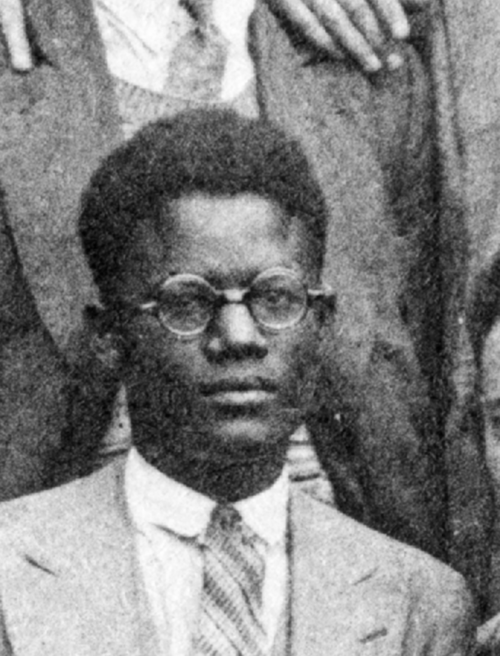
Biography
Introduction: A Blazing Star of African Poetry
In the pantheon of Arts & Culture, few figures burn as brightly and briefly as David Diop†. A foundational voice of the Negritude movement, Diop was a Senegal-born poet whose searing, revolutionary verse gave powerful expression to the pain of colonialism and the defiant hope of a renascent Africa. Though his life was tragically cut short at age 33, his impact on African literature and post-colonial identity is monumental. His single published collection, Coups de Pilon (Pounding Hammers, 1956), remains a cornerstone of Francophone African poetry. David Diop† is celebrated not just as a Poet & Negritude Pioneer, but as a symbol of intellectual resistance, whose work continues to inspire generations in Senegal and across the African diaspora.
Early Life & Education: Forging a Pan-African Consciousness
David Mandessi Diop was born on July 9, 1927, in Bordeaux, France, to a Senegalese father and a Cameroonian mother. This mixed heritage placed him at a cultural crossroads from birth, deeply influencing his pan-African perspective. After his father's passing, he was raised primarily in West Africa, splitting his childhood between Senegal and Cameroon. This firsthand experience of African life, juxtaposed with his education in the French colonial system, forged a critical awareness of the contradictions and injustices of imperialism.
Diop returned to France for his secondary and university education. It was in the intellectual ferment of post-war Paris that he found his voice. He attended the Lycée Marcelin Berthelot and later studied at the University of Paris (Sorbonne). Here, he fell under the influence of the burgeoning Negritude movement, led by luminaries like Aimé Césaire (who coined the term), Léopold Sédar Senghor (future president of Senegal), and Léon-Gontran Damas. The movement's mission—to reclaim African cultural identity, challenge French assimilation, and assert black pride—resonated profoundly with the young David Diop†. His early poems began to appear in the influential journal Présence Africaine, establishing him as a fiery new talent.
Career & Major Achievements: The Pounding Hammer of Verse
The career of David Diop†, though brief, was defined by a singular, powerful achievement: the publication of his poetry collection Coups de Pilon in 1956. This work distilled the essence of his radical poetic vision and cemented his status as a leading Negritude Pioneer.
Thematic Power and Poetic Innovation
Diop's poetry was a direct, often scorching indictment of colonial oppression. Unlike some of his Negritude contemporaries who embraced a more lyrical, mystical celebration of Africanness, Diop's tone was frequently one of anger, irony, and urgent protest. His poems served as a stark counter-narrative to colonial propaganda. Key themes in his work include:
- The Brutality of Colonialism: Poems like "Les Vautours" ("The Vultures") graphically depict the violence and exploitation of the colonial enterprise.
- Reclamation of African History: In "Afrique" ("Africa"), he speaks directly to the continent, mourning its subjugation but affirming its pre-colonial dignity and future resurgence: "Africa, tell me Africa / Is this you, this back that is bent... / That very back that never breaks under the weight of humiliation?"
- Hope and Resistance: Despite the darkness, his work is shot through with a resilient hope for liberation and self-determination.
Impact and Recognition
The publication of Coups de Pilon was a landmark event in Arts & Culture. It received the prestigious Prix Littéraire des Étudiants (Students' Literary Prize) and was widely translated. David Diop† became a celebrated intellectual figure, not only for his literary merit but for his unwavering political stance. He worked as a teacher in Senegal and later in Guinea, and was deeply involved with the Présence Africaine network, contributing to the intellectual foundations of African independence movements. His work provided a potent artistic weapon in the struggle for decolonization, giving voice to a collective anger and aspiration.
Personal Life, Tragic Death & Enduring Legacy
Beyond his public persona as a revolutionary poet, David Diop† was known as a dedicated teacher and a man deeply committed to the future of Africa. He married in 1950 and had four children. His personal life was intertwined with his professional mission; he believed education was key to liberation. In 1960, as Senegal gained its independence, Diop's career and influence were poised to reach new heights.
Tragically, this promise was unfulfilled. On August 29, 1960, David Diop†, his wife, and the pilot died in an airplane crash off the coast of Dakar, Senegal. The nation, and the literary world, lost one of its most powerful voices at the very dawn of a new era.
His legacy, however, is indelible. David Diop† is remembered as:
- The "Protest Poet" of Negritude: He defined the movement's militant, confrontational strand.
- A Literary Inspiration: His work paved the way for subsequent generations of African and diaspora writers exploring themes of identity, injustice, and resistance.
- A Cultural Icon in Senegal: His poems are staples in school curricula across Francophone Africa, ensuring his words continue to educate and inspire.
Literary Estate & Lasting Value
While a traditional "net worth" or business portfolio is not applicable to David Diop†, the value of his literary estate and intellectual property is immense within the world of Arts & Culture. His body of work, though small, constitutes a priceless cultural asset. The ongoing publication, translation, and academic study of Coups de Pilon generate scholarly and publishing activity. His poems are anthologized globally in collections of post-colonial, African, and world literature. The commercial value lies in the continuous demand for his work in academic and general markets, a testament to its enduring relevance. More significantly, his true "wealth" lies in his profound and immeasurable impact on African intellectual history and the global literary landscape. As a Poet & Negritude Pioneer, David Diop† crafted a legacy of resistance and pride that remains a vital source of strength and identity for Senegal and the African continent.
Sources & Further Reading: The life and work of David Diop† are documented through academic publications, literary anthologies, and cultural histories of the Negritude movement. Key sources include his seminal work Coups de Pilon/Hammer Blows (translated), critical studies from JSTOR on Negritude poetry, and biographical entries from reputable encyclopedias of African literature and Encyclopædia Britannica. The archives of the Présence Africaine journal also provide crucial primary source material on his early publications and intellectual circle.
† The dagger symbol (†) denotes that David Diop is deceased.
Net Worth Analysis
David Diop was a poet and academic, not a business figure; he died in 1960 and left no significant material estate of commercial value.
Quick Stats
Related People
Abasse Ndione
Novelist & Playwright
Abdel Rahman al-Abnudi†
Poet (Egypt-Sudan)
Abdelkrim Ghallab†
Novelist & Journalist
Abdellah Taïa
Novelist & Filmmaker