Biography
Introduction: The People's Leader
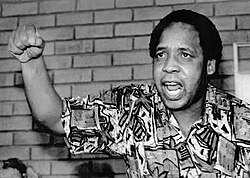
Chris Hani†, born Martin Thembisile Hani, stands as one of the most revered and influential figures in the South African struggle against apartheid. His life was a testament to unwavering commitment to justice, equality, and the liberation of the black majority. As the charismatic leader of the South African Communist Party (SACP) and the former Chief of Staff of Umkhonto we Sizwe (MK), the armed wing of the African National Congress (ANC), Chris Hani† embodied the militant spirit of the resistance. His key achievement lies not only in his military strategism but in his profound ability to connect with the masses, articulating their aspirations and becoming a symbol of hope for a free, non-racial, and socialist South Africa. His assassination in 1993 sent shockwaves through the nation and the world, irrevocably altering the political landscape and hastening the transition to democracy.
Early Life & Education: Forging a Conscience
Chris Hani† was born on June 28, 1942, in the small rural village of Sabalele, in what was then the Transkei region (now Eastern Cape). His father, a migrant worker in the mines, and his mother, a devout Catholic peasant, instilled in him the values of education and faith. Growing up under the harsh realities of Politics & Government structured by racial segregation, Hani witnessed firsthand the poverty and systemic oppression inflicted on black South Africans. These early experiences planted the seeds of his political consciousness.
He was a brilliant student, attending Lovedale Institute, a prestigious missionary school. Initially, he aspired to become a Catholic priest, drawn to the social teachings of the church. However, his path shifted dramatically when he enrolled at the University of Fort Hare in 1959, a renowned incubator of African political thought. At Fort Hare, he was exposed to radical ideas and joined the ANC Youth League. He also became a member of the South African Communist Party (SACP), drawn to its analysis of class and national oppression. His political activities led to his arrest and subsequent banning under the Suppression of Communism Act, forcing him to complete his BA in Classics and English through correspondence from the University of South Africa (UNISA) in 1962.
Career & Major Achievements: The Soldier and The Strategist
The trajectory of Chris Hani†'s life changed irrevocably when he went into exile in 1963 to join the armed struggle. His career within the liberation movement was marked by rapid ascent, immense courage, and strategic brilliance.
Rise in Umkhonto we Sizwe (MK)
Hani underwent military training and quickly distinguished himself as a dedicated and capable soldier. He fought in the Wankie and Sipolilo campaigns in Rhodesia (now Zimbabwe) alongside ZIPRA forces in 1967-68, experiences that hardened his resolve. By the late 1970s, he had risen to become the Political Commissar of MK, responsible for the political education of soldiers. In 1982, he was appointed Deputy Commander of MK, and by 1987, he became its Chief of Staff. In this pivotal role, Chris Hani† was instrumental in rebuilding MK's structures inside South Africa following the crushing blows of state repression in the 1960s, overseeing operations that kept the pressure on the apartheid regime.
Leadership in the South African Communist Party (SACP)
Parallel to his military role, Hani climbed the ranks of the SACP. He was elected to the Party's Central Committee in 1974 and its Politburo in 1985. His passionate oratory, clear ideological stance, and genuine connection with grassroots communities made him immensely popular. In 1991, following the unbanning of the liberation movements, Chris Hani† was elected the General Secretary of the SACP, succeeding Joe Slovo. As the leader of the Party, he championed a two-stage revolution: national liberation followed by the advance to socialism. He argued fiercely against the marginalization of the working class and the poor in the negotiation process, ensuring that socio-economic transformation remained a central demand.
Impact on the Negotiations and Mass Mobilization
During the critical period of negotiations between 1990 and 1993, Chris Hani† played a complex and crucial role. While committed to the peace process, he was a critical voice, warning against compromises that would sacrifice the fundamental transformation of society. He was a key figure in the Mass Democratic Movement, mobilizing the "rolling mass action" strategy that combined negotiations with street power to force concessions from the National Party government. His ability to speak directly to the militant youth, the unemployed, and township dwellers made him arguably the most popular leader after Nelson Mandela. This very popularity made him a target for those seeking to derail the transition to majority rule.
Personal Life, Assassination & Legacy
Despite his fierce public persona, those close to Chris Hani† described him as a man of simple tastes, with a deep love for reading, particularly history and political theory. He was married to Limpho Hani, and they had three daughters. His personal life was entirely subsumed by the struggle, and he lived with the constant shadow of danger.
On the morning of April 10, 1993, Chris Hani† was assassinated in the driveway of his home in Dawn Park, Boksburg, by Polish immigrant Janusz Waluś, with the conspiracy involving Conservative Party MP Clive Derby-Lewis. The murder was intended to plunge South Africa into a racial civil war. Instead, it provoked an unprecedented outpouring of grief and anger, followed by remarkable discipline. Nelson Mandela's televised address, appealing for calm, was a defining moment. Hani's death ultimately galvanized the nation, forcing negotiators to set a firm date for the first democratic elections: April 27, 1994.
The legacy of Chris Hani† is monumental. He is remembered as a martyr of the liberation struggle, a communist who was deeply rooted among the people, and a leader whose vision for economic justice remains urgently relevant. His name is invoked in contemporary South African politics as a symbol of uncompromising commitment to the poor. Statues, hospitals, schools, and the prominent Chris Hani† Baragwanath Hospital bear his name, ensuring his memory endures in the fabric of the nation he helped to free.
Historical Significance & Commemoration
While discussions of net worth and business ventures are irrelevant to a revolutionary figure like Chris Hani†, his value is measured in political capital and enduring influence. He consciously lived a life of material sacrifice for a collective cause. His "wealth" was the trust and devotion of millions of South Africans. Today, his legacy is managed through foundations and memorials dedicated to preserving his ideas and continuing his work for social justice. The Chris Hani† Institute, for example, is an educational NGO focused on policy research and leadership development aligned with his principles. The annual commemoration of his assassination serves as a national moment of reflection on the cost of freedom and the unfinished business of economic liberation in South Africa.
For further reading on the life and times of Chris Hani, refer to credible historical resources such as the South African History Online archive and the South African Communist Party historical documents.
Net Worth Analysis
Chris Hani was assassinated in 1993 and was a political activist, not a business figure, so he did not accumulate personal wealth in a traditional sense.
Quick Stats
Related People
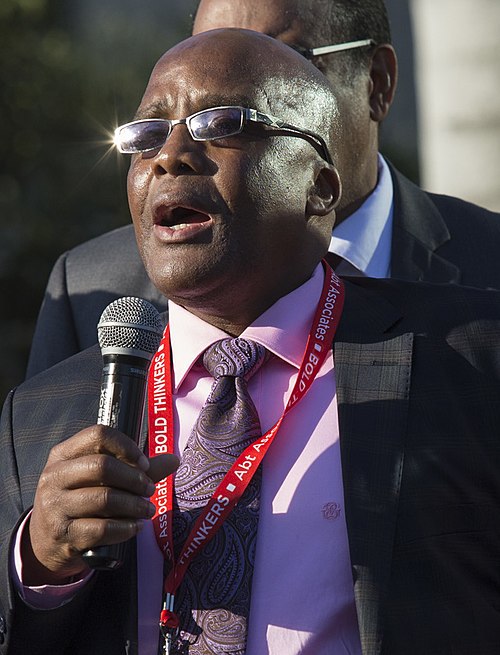
Aaron Motsoaledi
LP; Minister of Home Affairs
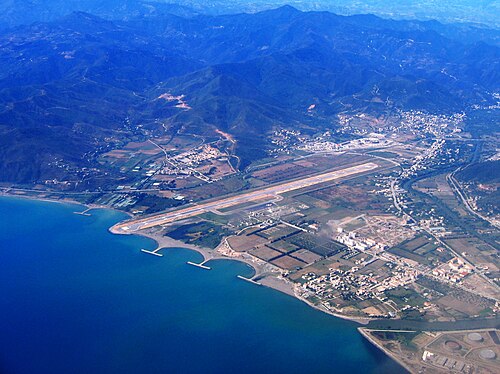
Abane Ramdane†
FLN Leader & Strategist
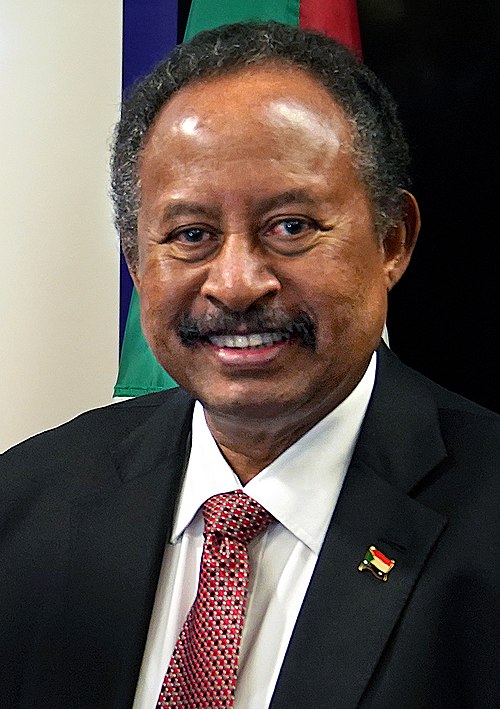
Abdalla Hamdok
Ex-Prime Minister
Abdallah Kigoda
Ex-Minister of Natural Resources