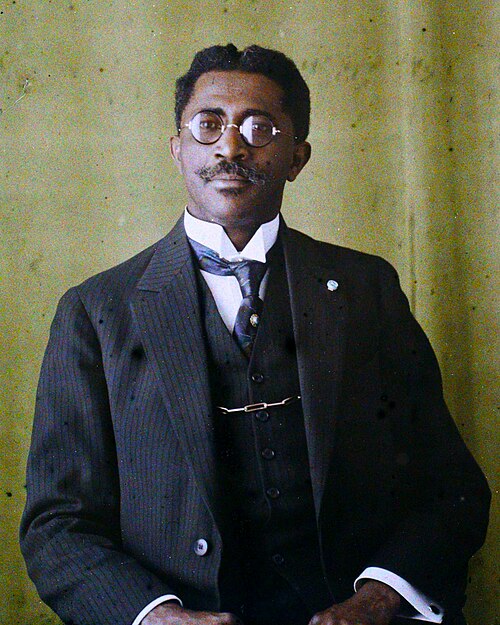
Financial Breakdown
Asset Distribution
Assets vs Liabilities
Assets
Liabilities
Disclaimer: These financial estimates are based on publicly available information and should be considered approximate. Last updated: 12/29/2025
Biography
Introduction: A Tenure of Contradiction and Controversy
Charles Dunbar Burgess King† (1875–1961) stands as one of the most significant and controversial figures in the political history of Liberia. Serving as the country's Seventeenth President from 1920 to 1930, his administration is a study in stark contrasts. On one hand, Charles D. B. King† presided over a period of significant international engagement, securing a major loan and advocating for Liberia on the world stage. On the other, his presidency is indelibly marred by two of the most infamous scandals in early 20th-century African Politics & Government: the Fernando Po labor scandal and an election victory of mathematically impossible proportions. His tenure ultimately concluded with his resignation, a rare event in Liberian executive leadership, cementing his legacy as a complex leader whose actions had profound consequences for the nation.
Early Life & Education: Foundations of a Political Career
Charles D. B. King† was born on March 12, 1875, in Monrovia, Liberia, into a prominent family of the Americo-Liberian elite—descendants of freed American and Caribbean slaves who founded the republic. This social positioning provided him with significant advantages in a society where political power was largely concentrated within this community. His early education took place at Liberia's premier institutions, reflecting his family's status.
He pursued higher education at the prestigious Liberia College (a precursor to the University of Liberia), where he received a classical education in law and the humanities. This formative experience equipped him with the rhetorical and administrative skills valued in Liberian politics. Before ascending to the presidency, Charles D. B. King† built an extensive resume in public service. He served as a lawyer, a private secretary to several presidents, and as Attorney General of Liberia. His diplomatic career was particularly notable; he acted as Liberian Consul to the United States and later served as Secretary of State under President Daniel E. Howard from 1912 to 1920. These roles provided him with crucial experience in domestic governance and, more importantly, in navigating the complex and often predatory international relations of the era, particularly with European colonial powers and the United States.
Career & Major Achievements: Diplomacy and Scandal
Charles D. B. King† was elected Seventeenth President of Liberia in 1920. His administration focused heavily on addressing Liberia's precarious financial situation and asserting its sovereignty amidst colonial encroachment.
International Diplomacy and the 1926 Loan
A key achievement of King's presidency was the negotiation of a $5 million loan from the American finance company, Firestone Tire and Rubber Company, in 1926. This agreement, which granted Firestone a massive 99-year lease for a rubber plantation, was a double-edged sword. It provided the Liberian government with much-needed capital and established a significant American economic interest in the country, which some argued acted as a deterrent against annexation by European powers. However, the loan terms were widely criticized as exploitative, mortgaging the nation's economy and tying its fortunes closely to a single foreign corporation. This deal remains a pivotal, if contentious, aspect of his economic policy.
The Fernando Po Scandal and Forced Labor
The darkest chapter of King's presidency involved the Fernando Po scandal. In 1929, an investigation by the League of Nations confirmed reports that high-ranking Liberian officials, including the vice president and the president's own relatives, were involved in a system of forced labor. Indigenous Liberians were being sent to the Spanish island of Fernando Po (now Bioko, Equatorial Guinea) under conditions indistinguishable from slavery. While Charles D. B. King† was not directly implicated in authorizing the scheme, the international report held him morally responsible for the actions of his administration. The scandal severely damaged Liberia's international reputation and exposed the deep systemic inequalities between the Americo-Liberian elite and the indigenous population.
The 1927 "Landslide" Election
Further eroding his credibility was the presidential election of 1927. Running for re-election against Thomas J. Faulkner, Charles D. B. King† was officially declared the winner with a ludicrous margin. Official results showed King receiving 243,000 votes in a country with only about 15,000 registered voters at the time. This brazen electoral fraud entered the annals of political history as a notorious example of ballot-rigging and was famously satirized in international media.
Resignation and Aftermath
The cumulative pressure from the League of Nations report on forced labor and the international ridicule over the fraudulent election made King's position untenable. In December 1930, Charles D. B. King† resigned from the presidency—a first in Liberian history. He was succeeded by his Vice President, Edwin Barclay. His resignation was seen as a necessary step to preserve the Liberian state from potential foreign intervention and sanctions.
Personal Life & Legacy: A Lasting Impact
Outside of politics, Charles D. B. King† was known as a well-read man and a devout Episcopalian. He was a prominent figure in Monrovia's social and religious circles. His personal life, however, was overshadowed by his political career. His legacy is profoundly complex and serves as a critical case study in post-colonial African governance.
The lasting impact of King's presidency is multifaceted. Positively, he helped secure Liberia's financial survival and deepened its strategic relationship with the United States through the Firestone agreement. However, his Executive Leadership is more often remembered for its failures: the brutal exploitation of citizens, the extreme corruption exemplified by the 1927 election, and the stark exposure of the internal divisions within Liberian society. His tenure highlighted the vulnerabilities of a small African republic in the interwar period and the moral compromises made by its ruling class. The scandals of his presidency forced a period of introspection and minor reform in Liberia, though the fundamental structures of power remained largely unchanged for decades. Charles D. B. King† thus represents a pivotal figure whose actions brought Liberia to both the negotiating table with global capital and the court of international moral condemnation.
Financial Context and Business Ventures
While not a business magnate in the traditional sense, Charles D. B. King†'s financial legacy is inextricably linked to statecraft and the Firestone deal. His personal net worth is not well-documented, but as a senior statesman and president from the elite class, he would have lived comfortably. The significant financial context of his life revolves around the 1926 $5 million Firestone loan. This agreement, which he championed, was one of the largest financial transactions in Liberia's history at the time. It fundamentally redirected the nation's economic trajectory, shifting its primary export focus towards rubber and creating a long-term dependency on a single foreign corporation. The loan also included provisions for infrastructure development and stabilized government finances in the short term. Thus, King's most consequential "business venture" was a sovereign national deal that blended public policy with corporate interest, a defining characteristic of his era's Politics & Government in Liberia. The controversies surrounding labor practices on the very plantations this deal enabled further complicate the financial narrative of his presidency.
Key Facts and References
- Full Name: Charles Dunbar Burgess King†
- Presidential Term: January 5, 1920 – December 3, 1930
- Notable For: 1926 Firestone Loan, Fernando Po scandal, 1927 election fraud (243k votes vs. 15k voters).
- Preceded by: Daniel E. Howard
- Succeeded by: Edwin Barclay
- Died: September 4, 1961 (aged 86) in Monrovia, Liberia.
For further reading on this period, credible sources include the historical archives of the Library of Congress, academic works on Liberian history such as "Liberia: The Rise and Fall of the First Republic" by J. Gus Liebenow, and the official records of the League of Nations investigations.
Net Worth Analysis
Charles D. B. King was a historical political figure who served as President of Liberia from 1920 to 1930; he died in 1961 and has no contemporary net worth.
Quick Stats
Related People
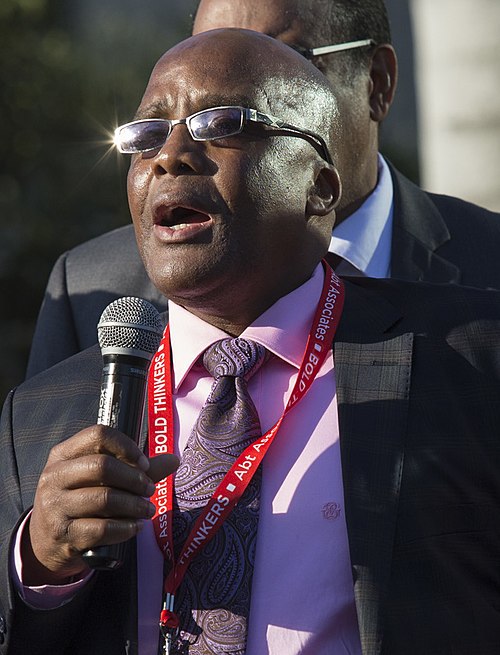
Aaron Motsoaledi
LP; Minister of Home Affairs
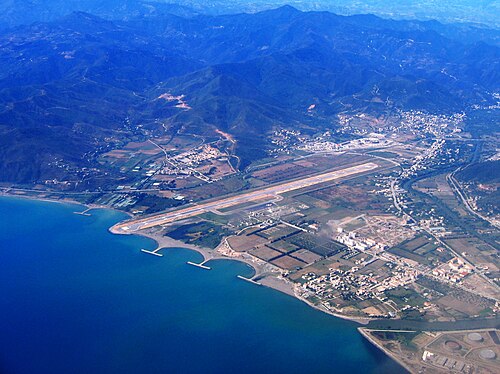
Abane Ramdane†
FLN Leader & Strategist
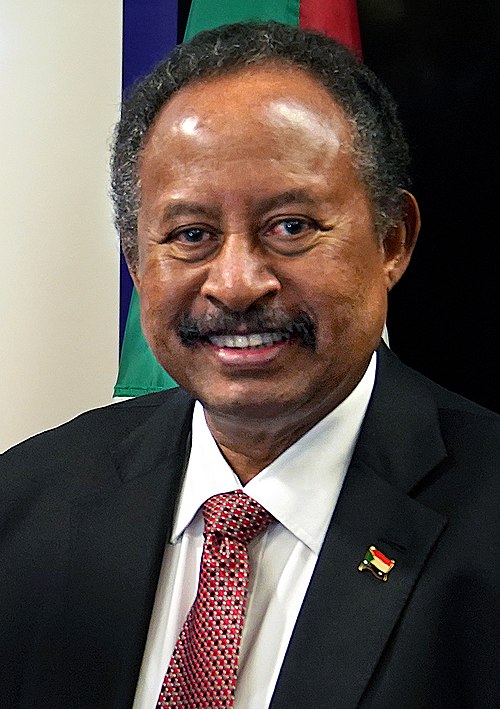
Abdalla Hamdok
Ex-Prime Minister
Abdallah Kigoda
Ex-Minister of Natural Resources