$1M
Estimated Net Worth
As of 2024 • medium confidence
Biography
Introduction: The Founding Father
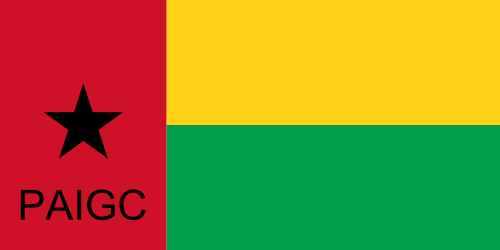
Aristides Maria Pereira† stands as a monumental figure in the history of Politics & Government in West Africa. Born in 1923 on the island of Boa Vista, he would become the inaugural Cape Verdean President, serving from 1975 to 1991. His legacy is inextricably linked to the struggle for liberation and the arduous task of nation-building. Pereira's most significant achievement was his pivotal role, alongside Amílcar Cabral, in co-founding the African Party for the Independence of Guinea-Bissau and Cape Verde (PAIGC). This revolutionary movement successfully fought for the independence of both nations from Portuguese colonial rule. As President, Aristides Pereira† guided a resource-scarce archipelago through its formative years, establishing a foundation of stability and one-party rule that would later transition to multiparty democracy.
Early Life & Education: Forging a Technocrat in the Colonies
Aristides Pereira† was born on November 17, 1923, in the village of Ponta do Sol, on what was then the Portuguese colony of Cape Verde. The son of a Catholic priest, he grew up amidst the chronic droughts and poverty that plagued the islands, an experience that deeply informed his later political vision. His early education was in Cape Verde, but his professional path took a technical turn. At the age of 18, he moved to the colony of Guinea-Bissau on the mainland, where he enrolled in a telecommunications school.
Excelling in his studies, Pereira became a radio telegraphist, a profession that would prove unexpectedly crucial to his future. He climbed the ranks within the Portuguese colonial telecommunications service, eventually becoming the chief of telecommunications in Guinea-Bissau. This position provided him with unique insights into the infrastructure of colonial administration and, more importantly, a secure communication network. His technical expertise and understanding of communication systems became invaluable assets during the clandestine organizing phase of the liberation struggle. These formative years in both Cape Verde and Guinea-Bissau cemented his understanding of the intertwined fate of the two territories and the necessity of a joint liberation effort.
Career & Major Achievements: From Revolutionary to President
The career of Aristides Pereira† is a narrative of revolutionary commitment and presidential stewardship. His political awakening led him to join Amílcar Cabral in founding the PAIGC in 1956. As Secretary-General of the party (a role he assumed after Cabral's assassination in 1973), Pereira was the strategic mind managing the political and diplomatic fronts of the war from exile in Conakry, Guinea.
The Liberation Struggle and Independence
While Cabral was the charismatic face and military strategist, Pereira was the organizational backbone. He masterminded the party's clandestine networks and international diplomacy. Following the Carnation Revolution in Portugal in 1974, which overthrew the authoritarian Estado Novo regime, negotiations for independence accelerated. Aristides Pereira† led the PAIGC delegation in the talks with the new Portuguese government. These efforts culminated in the independence of Guinea-Bissau in 1974 and Cape Verde on July 5, 1975. The National People's Assembly of Cape Verde unanimously elected Aristides Pereira† as the country's first President.
Presidency and Nation-Building
As President, Pereira faced daunting challenges: a barren land with no natural resources, widespread poverty, and a diaspora larger than the domestic population. His government's major achievements included:
- Establishing Political Stability: He unified the islands under a single, stable government, avoiding the post-independence civil strife that afflicted other nations.
- Focus on Human Development: Despite a socialist-oriented model, he prioritized education and literacy, achieving one of the highest literacy rates in Africa by the 1980s.
- Non-Aligned Foreign Policy: He skillfully navigated the Cold War, maintaining relations with both Eastern and Western blocs to secure vital development aid.
- Economic Management: He promoted agricultural projects to combat drought and food insecurity, laying early groundwork for later economic reforms.
His presidency, however, was not without criticism. It was a one-party state where the PAIGC (later renamed PAICV) held all power. The dream of unification with Guinea-Bissau collapsed after a 1980 coup in Bissau, leading Cape Verde to form its own separate party. In 1990, bowing to internal and external pressures for democratization, Aristides Pereira† oversaw the introduction of a multiparty system. He was defeated in the first democratic presidential election in 1991 by António Mascarenhas Monteiro, ceding power peacefully—a significant testament to his commitment to the nation's stability.
Personal Life & Legacy: The Quiet Revolutionary
Away from the public eye, Aristides Pereira† was known as a reserved, disciplined, and modest man—a stark contrast to the flamboyant style of many independence-era leaders. He was deeply influenced by his Catholic upbringing and his strong sense of moral duty. He married Carlina Pereira in 1975, and the couple had children. His personal interests were often overshadowed by his devotion to public service, but he was known for his intellectual curiosity and quiet demeanor.
The legacy of Aristides Pereira† is complex but foundational. He is revered as a Politics & Government icon who led Cape Verde from colonialism to sovereign statehood. His greatest legacy is the stable and peaceful nation he helped create, which became a rare example of democratic consolidation and incremental economic progress in Africa. While later generations have critiqued the authoritarian aspects of his rule, his integrity and lack of personal corruption are widely acknowledged. He passed away on September 22, 2011, in Coimbra, Portugal. Today, airports, avenues, and institutions across Cape Verde bear his name, a permanent reminder of the man who was the republic's first President.
Net Worth & Business Ventures: A Leader of Modest Means
Unlike many post-colonial leaders, Aristides Pereira† was not associated with personal wealth accumulation or significant private business ventures. His life was defined by public service, first in the colonial telecommunications sector and then in the liberation movement and government. There are no records or credible reports suggesting he engaged in business for personal gain during or after his presidency. His financial situation was likely tied to his state salary and pension. In the context of Politics & Government, Pereira is remembered for his perceived honesty and modest lifestyle. This stands as a notable aspect of his character, especially in a region where "presidential wealth" has often been a source of controversy. His legacy in this regard is one of a leader who prioritized national development over personal enrichment, leaving an estate of historical significance rather than material fortune.
Sources for this biography include historical records from the Cape Verdean government, academic analyses of the PAIGC liberation movement, and obituaries from international news agencies such as BBC News and The New York Times documenting his life and passing.
Net Worth Analysis
Aristides Pereira was a modest public servant and former president of Cape Verde, not Guinea-Bissau, with no known significant private wealth or inclusion on billionaire lists.
Quick Stats
Related People
Aaron Motsoaledi
LP; Minister of Home Affairs
Abane Ramdane†
FLN Leader & Strategist
Abdalla Hamdok
Ex-Prime Minister
Abdallah Kigoda
Ex-Minister of Natural Resources